
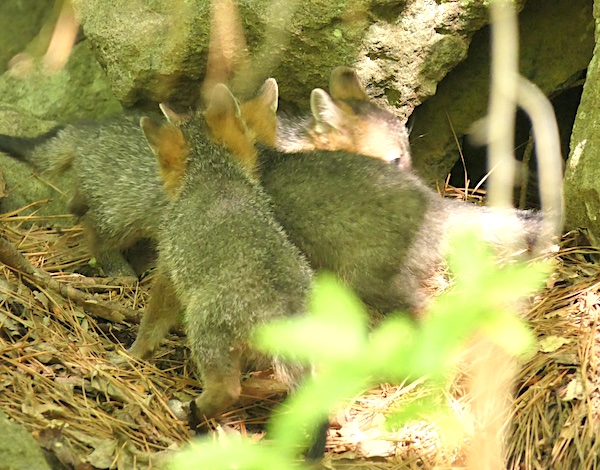
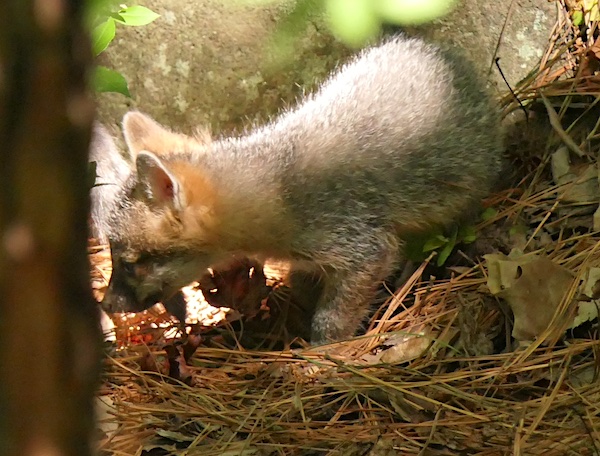
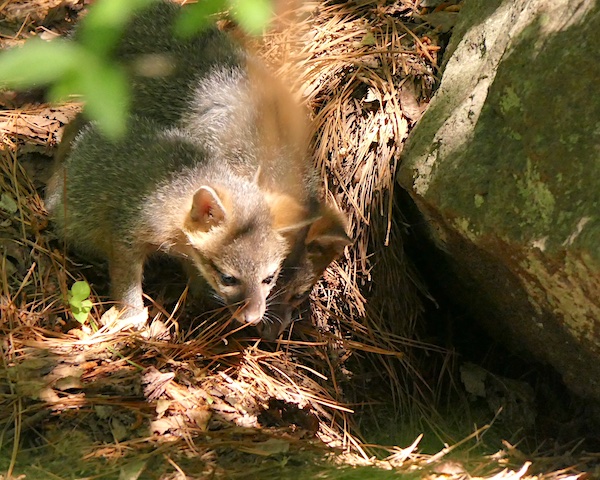
Top Photo: Gray fox pup.
Things are moving fast out on the outdoor loop through Explore the Wild and Catch the Wind. New life, travelers, and old friends are all making the scene.
A gray fox has decided to den in a rocky depression between the Red Wolf Overlook and the Lemur House (the red wolves themselves have put out 5 young this spring). I’ve counted 3 fox pups but may have missed one, confirmation on the three.
A couple of interesting butterflies appeared on a small patch on dogbane in the Butterfly House Garden. First, a banded hairstreak was spotted nectaring on the tiny flowers of the milkweed-like and toxic plant, hemp dogbane (or just plain dogbane). The butterflies’ host plants consist of mainly trees in the oak and hickory families.
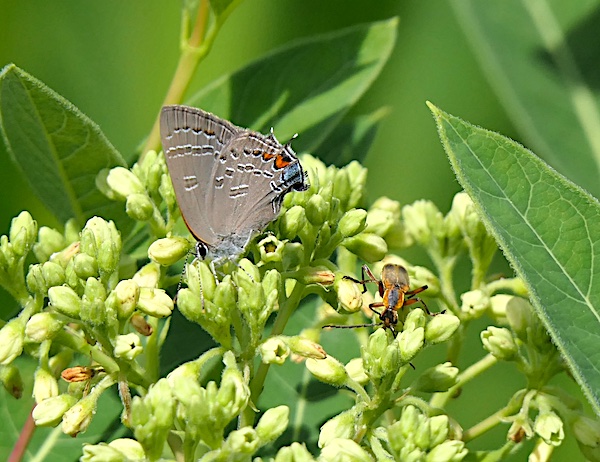
A great purple hairstreak was next in line at the dogbane. Quite an attractive butterfly, its most remarkable feature is the dazzling blue upper surface of its wings. Unfortunately, the butterfly rarely shows off that part of itself except when taking flight. Trying to get a picture of the butterfly in flight is a daunting affair (Sorry, If it were easy, there’d be a pic of the upper surface here).
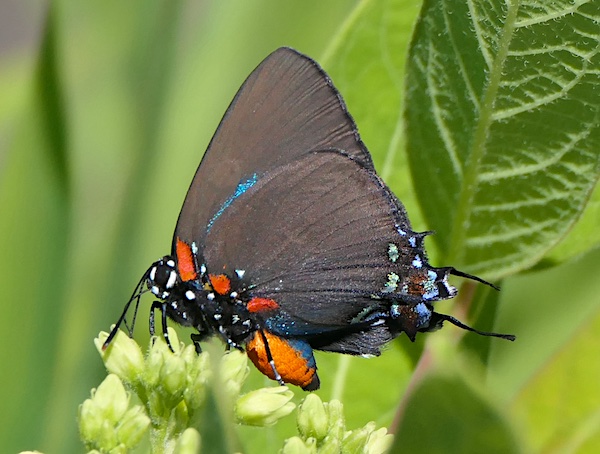
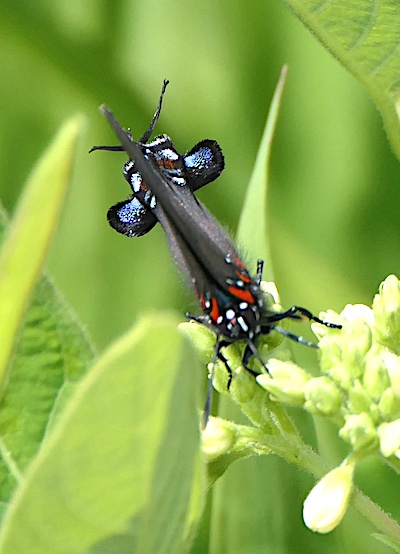
The hairtreaks or scales that project out from the insect’s wings are meant to mimic and to fool a predator into thinking they are antennae and that this end of the butterfly is the head area (the real head has the red and white spots). An attack at the blue end of the insect would come away with a piece of wing and nothing vital.
Great purple hairstreaks lay eggs on mistletoe.
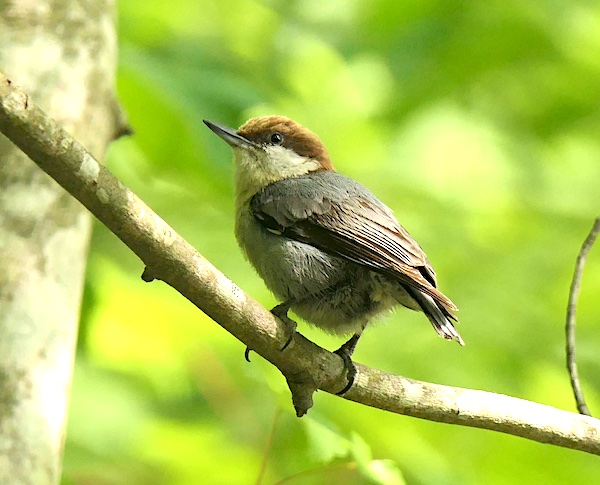
One of our local nuthatches, a brown-headed nuthatch, posed for me while it was out foraging for food in the Wetlands.
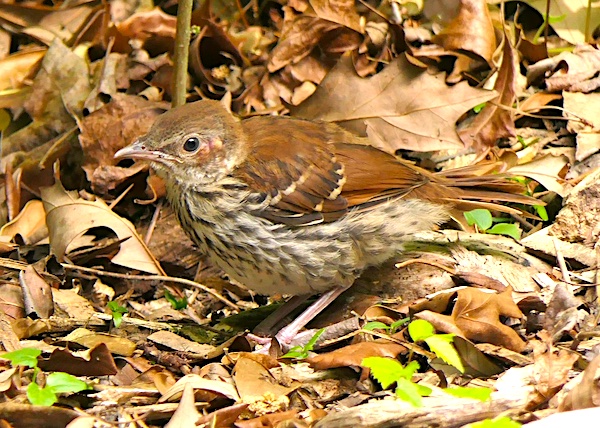
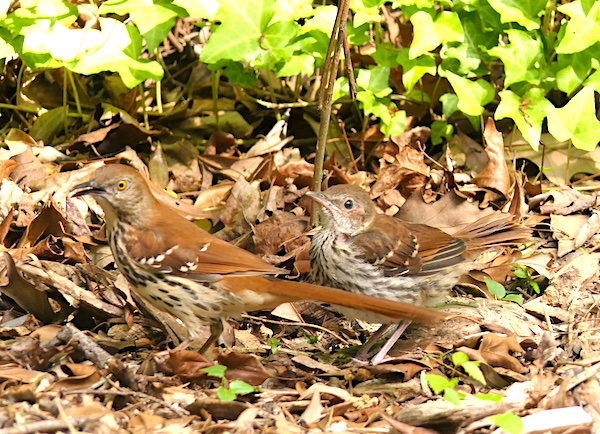
A brown thrasher was spotted teaching one of its young the proper thrasher foraging methods.
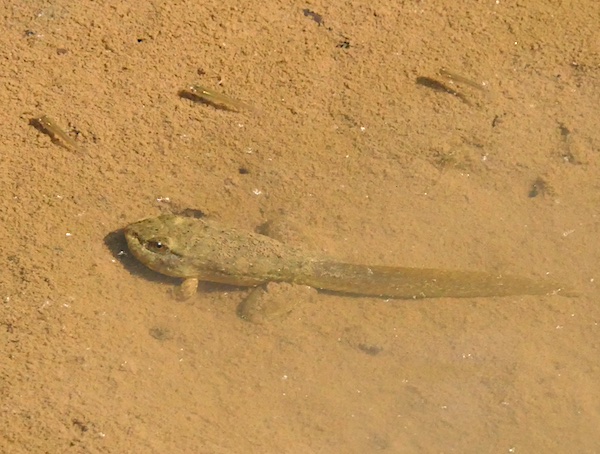
From the Floating Walkway in Explore the Wild you may see some truly large tadpoles, but you better hurry, they’re rapidly becoming froglets, and soon frogs. Worse yet, the water’s drying up.
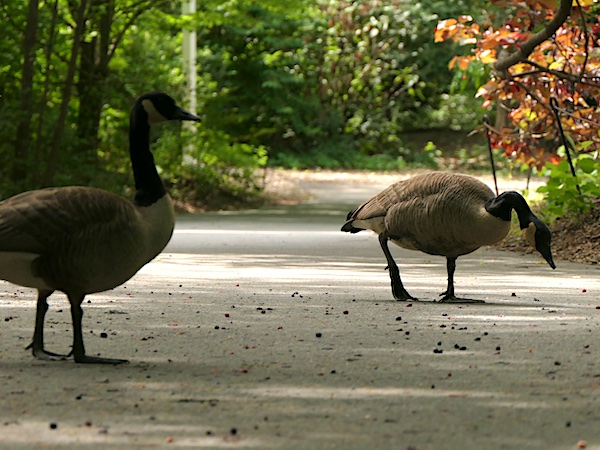
If you’ve spent any time outdoors at the museum, you’ve probably seen Canada geese. At this time of year they enjoy mulberries, which seem to continuously drop from the numerous mulberry trees along the path.
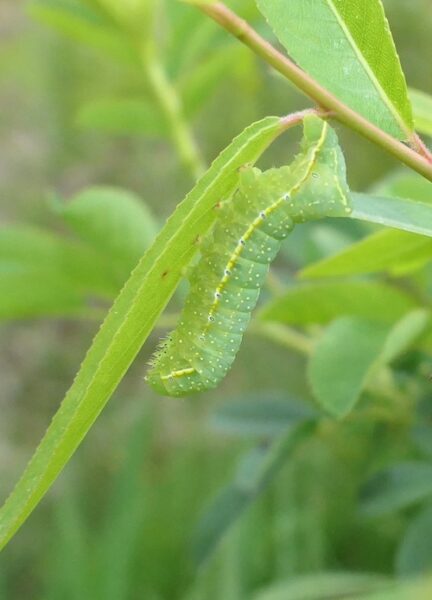
From the deck of the Floating Walkway I spotted an inch long caterpillar suspended upside down from a leaf stem. It had the appearance of a hornworm, sans horn, but was much smaller than most sphinx moth caterpillars. A fairly quick search through “Caterpillars of Eastern North America” pointed towards copper underwing. It’s not a sphinx moth but a small brown moth with coppery hind-wings which are generally hidden while the adult moth is at rest.
Their host plants are a variety of woody plants (trees and shrubs).
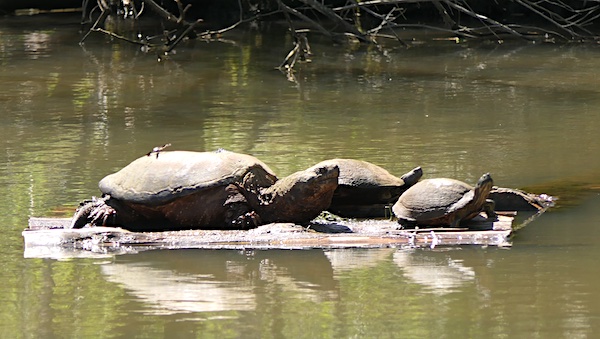
A common snapping turtle decided to share the basking platform with a couple of sliders (note the dragonfly on the snapper’s shell). I generally see snappers basking after mating. We may have hatchling snapping turtles in 90 or so days.
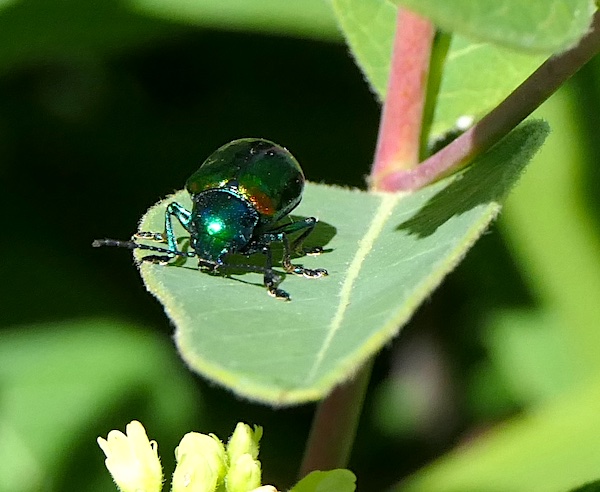
A familiar sight around dogbane (above) is the dogbane leaf beetle. The beetle spends its entire life around the plant. The beetles eat the leaves, mate on the leaves, and lay eggs on the leaves. When the eggs hatch the larvae fall to the ground, burrow in to the plant’s roots, and feed on the subterranean portion of the plant. They overwinter as larvae, pupating in the spring and transforming into iridescent adult beetles ready to do it all over again.
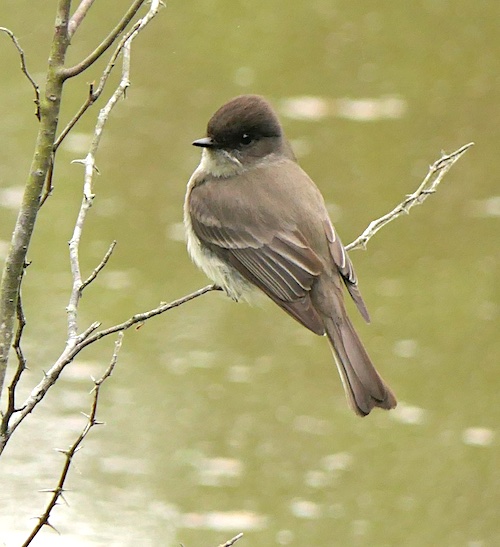
Eastern phoebes nest under our boardwalk every spring. If you stand by the railing on the boardwalk closest to the “Footprint Exhibit” near the entrance to the Black Bear Enclosure you’ll likely see the parents going back and forth under the walkway delivering food to the nestlings.
Montana, the newest addition to our Black Bear Enclosure, has, for the last several days, been perched on a sort of self-created eagle’s nest atop a tree on the ridge near the enclosure’s waterfall. Montana is a little over a year old, was discovered in Montana, apparently abandoned as a cub. Not being eligible for release into the wild, we took him in.
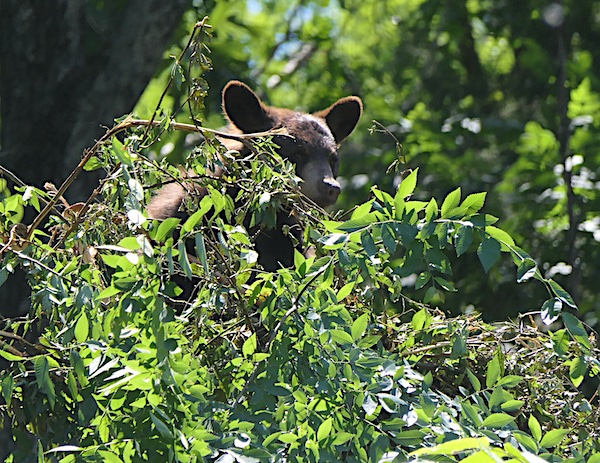
Introductions into an already occupied enclosure can be a tricky endeavor. However, our team of expert Animal Care Specialists know what they’re doing. Although Montana is presumably trying to distance himself from the other two bears in the enclosure, Murray whose intentions are playful, and Little who wants to be left alone and lets everyone know it, Montana, just needs a bit of time to adjust to the other two bears, and them him.
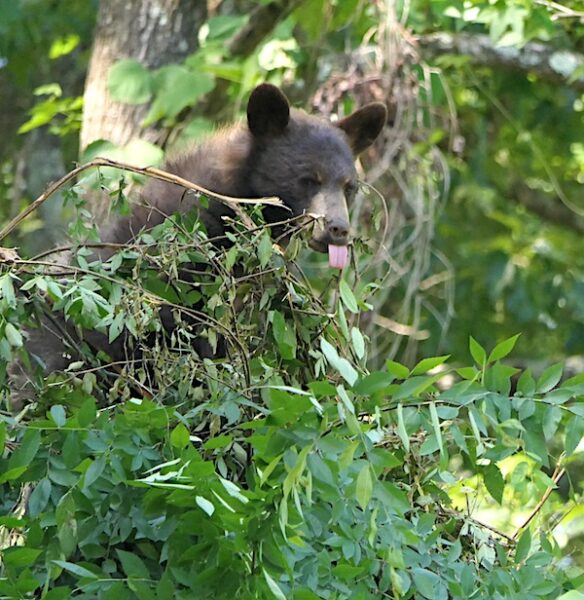
Montana was later seen yards up in a fruitful mulberry tree.
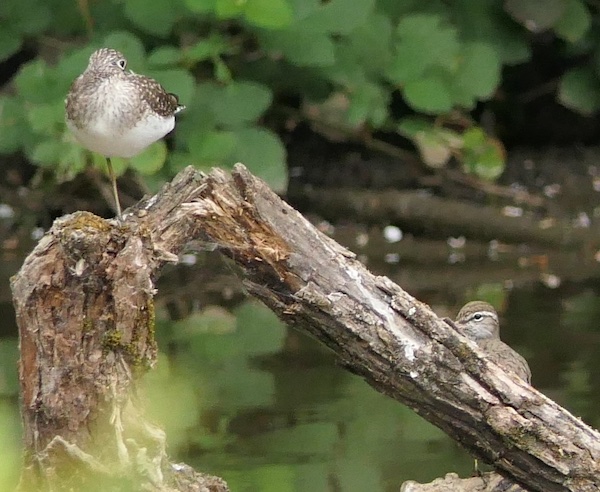
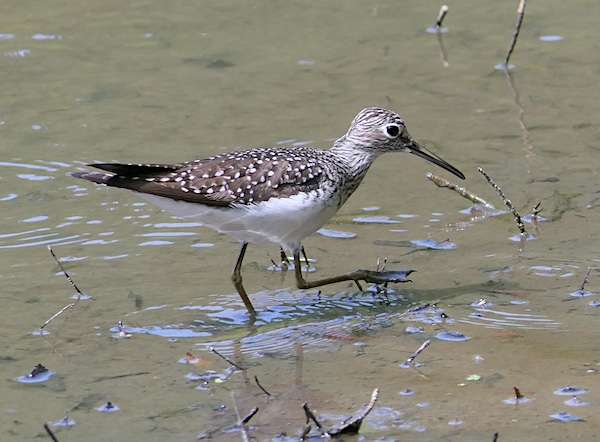
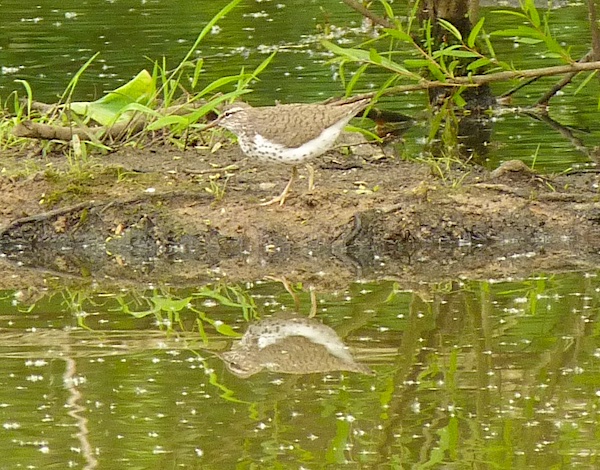
I saw what I thought might be a shorebird on the far side of the wetlands. A closer look revealed a resting solitary sandpiper. An even closer look and I noticed there was a spotted sandpiper in the frame as well, a double dose of shorebirds!
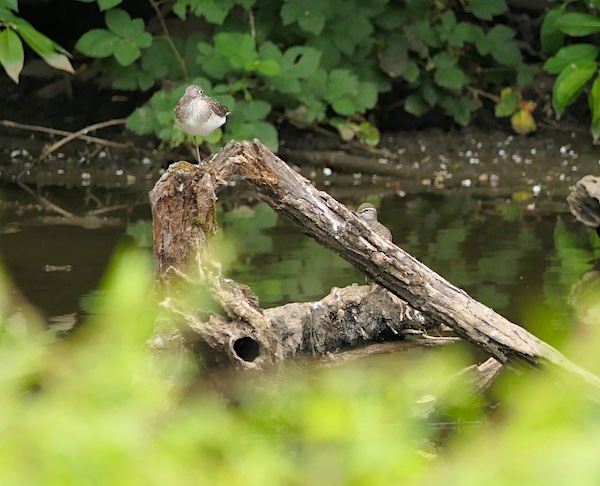
Shorebirds only stop in when the water level in our pond is very low creating mudflats for the birds to feed (insects and small crustaceans).
They only stay a day or two. I typically see a spotted and solitary sandpiper each spring and fall and I once eyed a killdeer. The killdeer made a few circles around the pond and kept going (the water was high at the time and there were no suitable landing sites). Solitary and spotted sandpipers are the only species we’re likely to get here, except of course the killdeer and potentially least sandpiper (no luck so far).
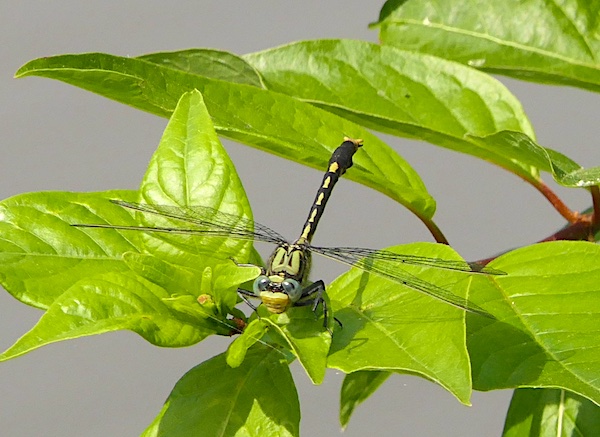
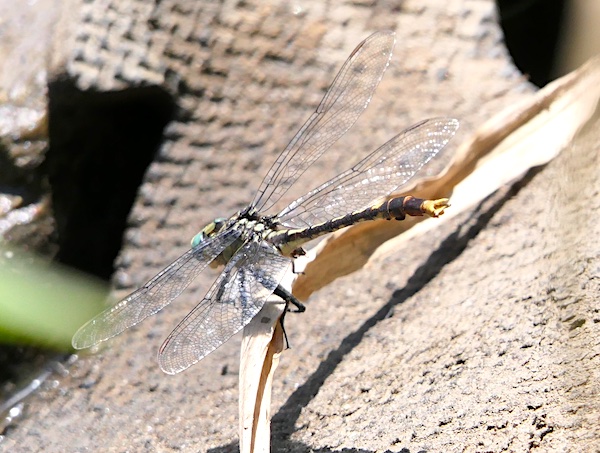
A new species of dragonfly has joined the list of 42 damselflies and dragonflies recorded by me at the museum. A unicorn clubtail surprised me as I’d never seen one here before. Perhaps the low water with exposed mud created the conditions necessary for their occurrence. They prefer muddy bottom lakes and ponds and tend to perch on the ground or low vegetation. We have both.
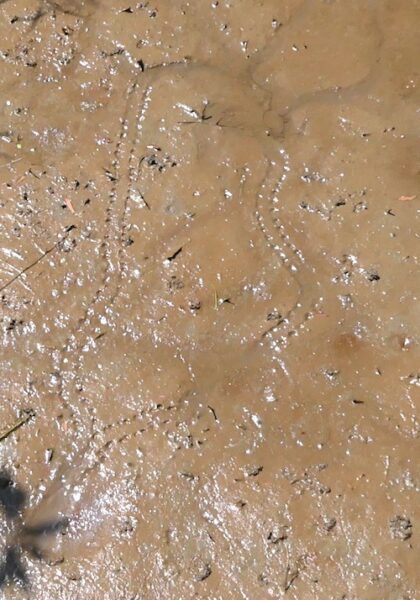
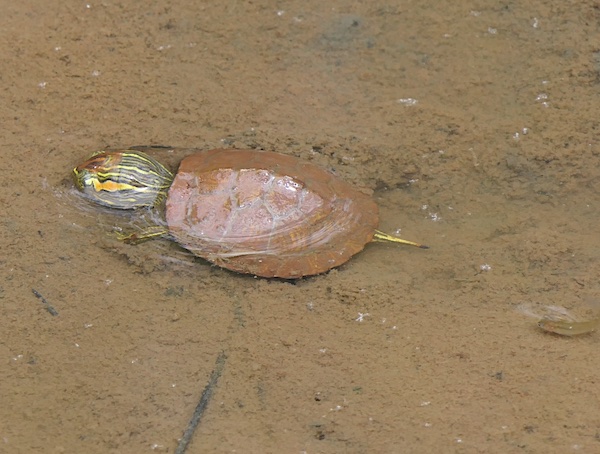
The dry condition of our wetland is not only exposing mud, but creating visible signs of who may have passed by. The turtle tracks (below) in the mud are approximately 1’’ across and show the passage of a hatchling turtle, most likely a yellow-bellied slider.
A little further on, where there was still water, was the turtle.
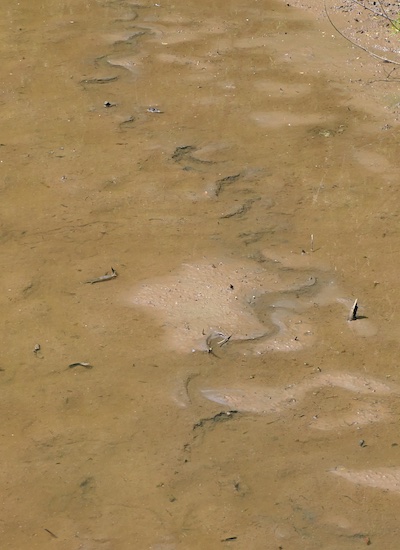
And finally take a close look at the tracks below. What do you see?
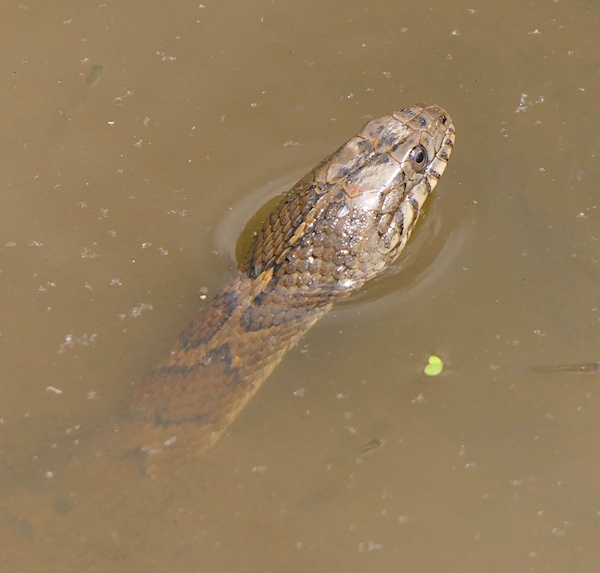
Enjoy your hike!
Ranger Greg
The baby fox photos are so nice! Do you think the family will stay on campus?
I think they’ll all be gone to find their own spaces in another five months or so.
Thanks,
Love the photos of the fox fox kits. Your photos of Montana are assume!