
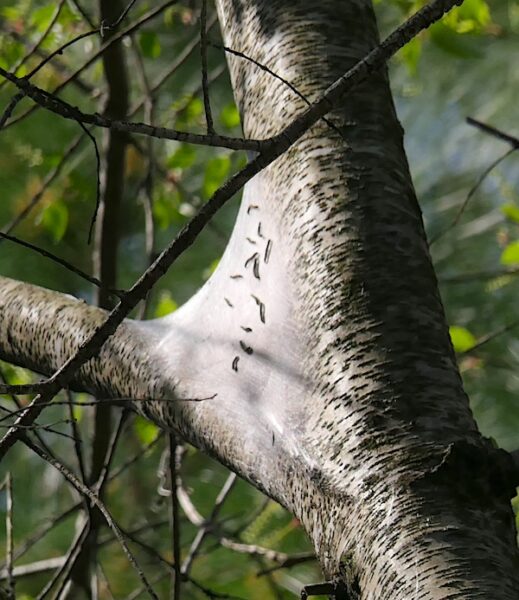
Top Photo: Tent caterpillar “tent.”
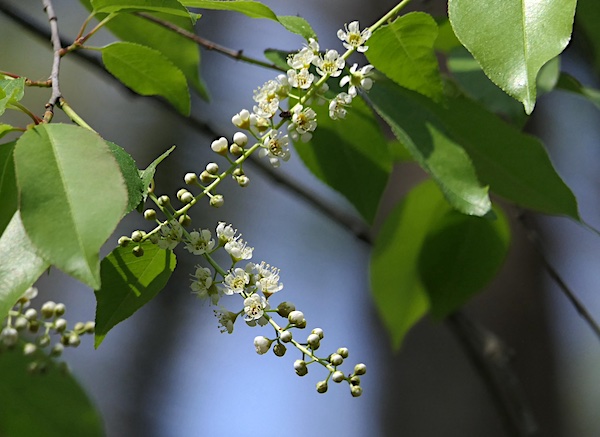
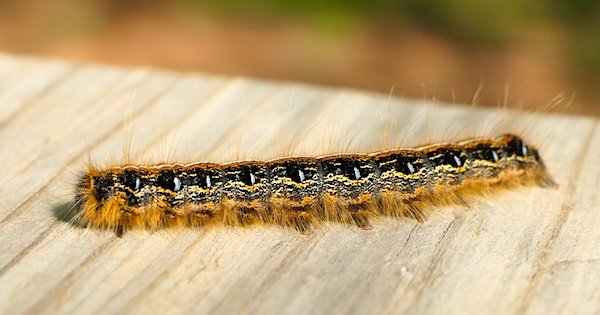
Tent caterpillars are actively building “tents” in our cherry trees. They construct the silken, protective predator barrier in the crotch of the tree. Traveling out of the tent to feed on the fresh young leaves of the cherry they retreat back into the tent while resting, enlarging the tent as they grow.
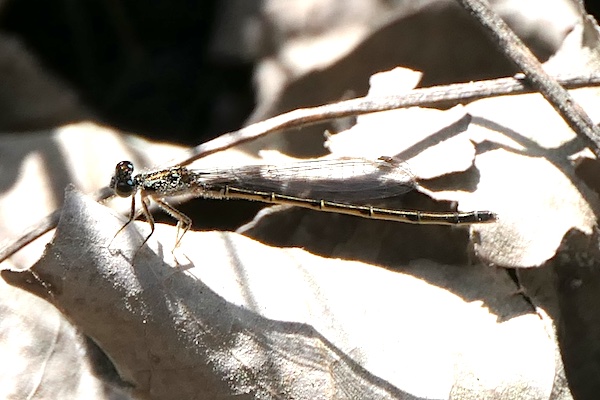
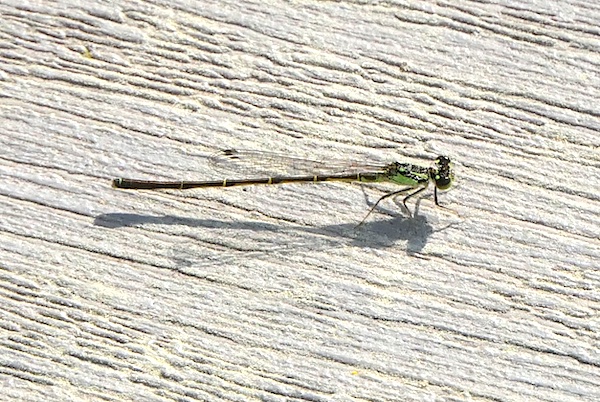
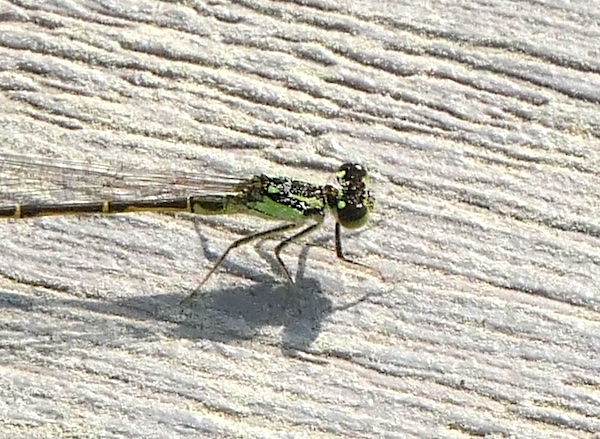
Fragile fork tails are tiny, delicate little damselflies. Early each spring they crawl out of their larval freshwater homes, find a grass stem or twig to attach to and emerge from the nymphal outer skin to become adult damselflies.
They’re low flying insects and can be difficult to see as they wisp by, whether you’re looking for them or not. On this day I found two of them, a male and a female, from the Floating Walkway in our wetlands.
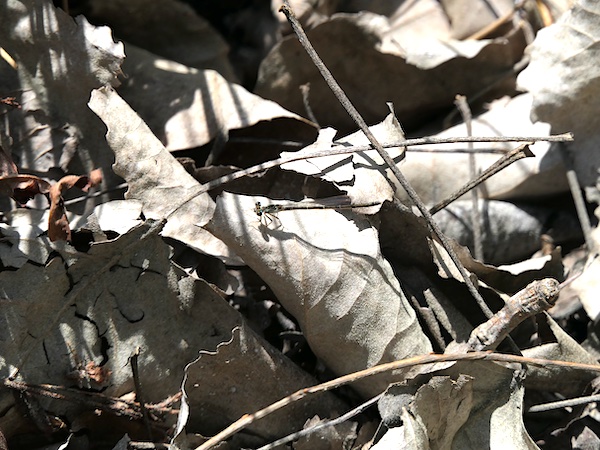
Springtime’s here for sure.
Some differences between damselflies and dragonflies
Dragonflies have four wings. The fore and hind wings are differently shaped and are held out to the sides when perched, in most dragonflies.
The eyes of most dragonflies cover much of the head.
The insects’ abdomens are thick, some species with “clubs” at the end.
Damselflies also have four wings but the fore and hind wings are the same shape, or nearly so. Most damselflies hold their wings over their backs when perched.
The eyes of damselflies are on the sides of their heads (picture a hammerhead shark).
Damselfly abdomens are thin and straight.
Ranger Greg