
Top Photo: Monarch larva.
Fall is creeping up on us. And though it’s forecast to be in the 90s all week I can feel, and see, the season turning.
Here’s what’s going on in our neighborhood.
Amanita mushroom (Amanita jacksonii) is a common mushroom of the Piedmont. The one pictured was along the path in Explore the Wild. They’re edible, but I’m not recommending eating them.
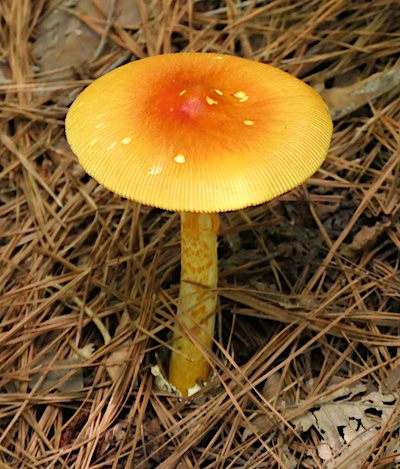
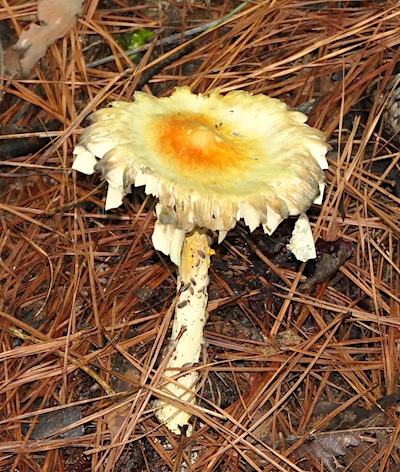
It looks as though something has eaten part of the mushroom.
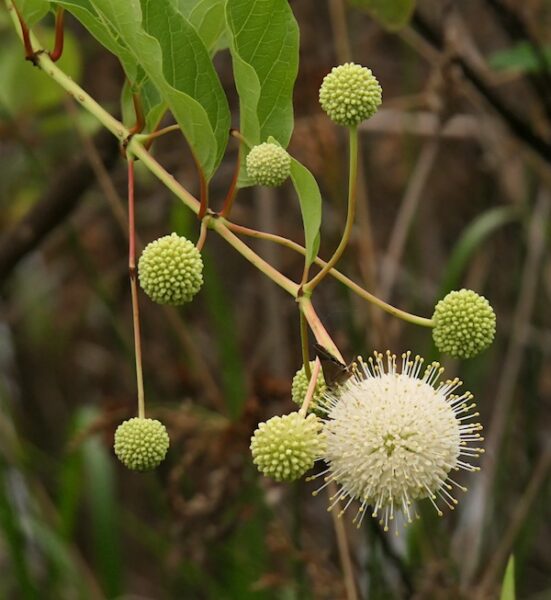
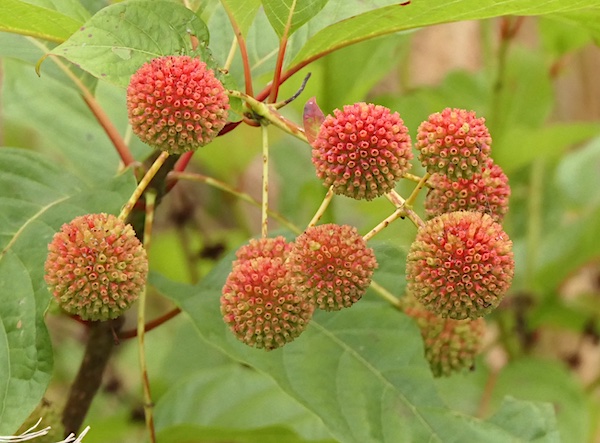
Buttonbush is well represented in and around our wetland. Buds, flowers and seedpods appear at the same time.
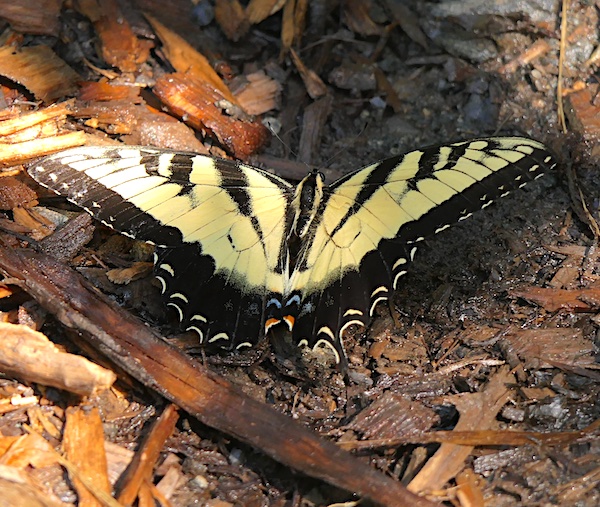
A male eastern tiger swallowtail takes a break on the warm, moist mulch outside Into the Mist in Catch the Wind.
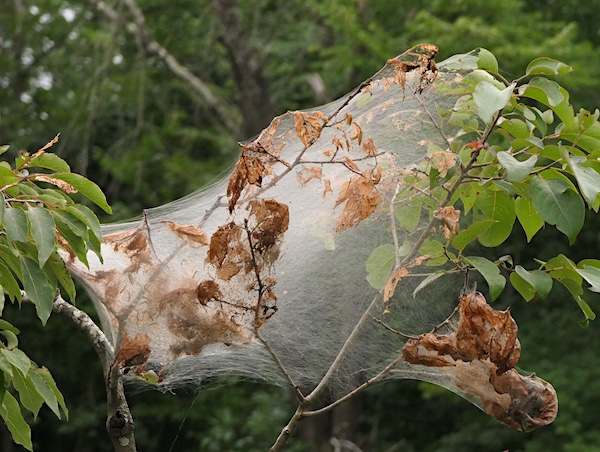
Fall webworms are building their protective silk coverings. They stay within the web while feeding and growing then crawl out to find suitable places under the leaf litter to spend the winter and pupate the following spring.
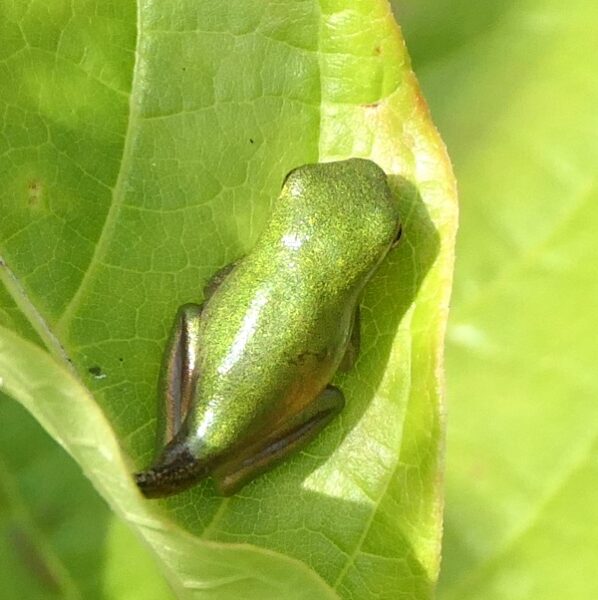
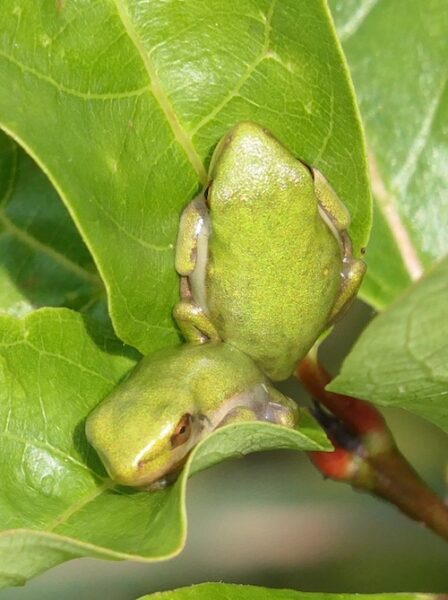
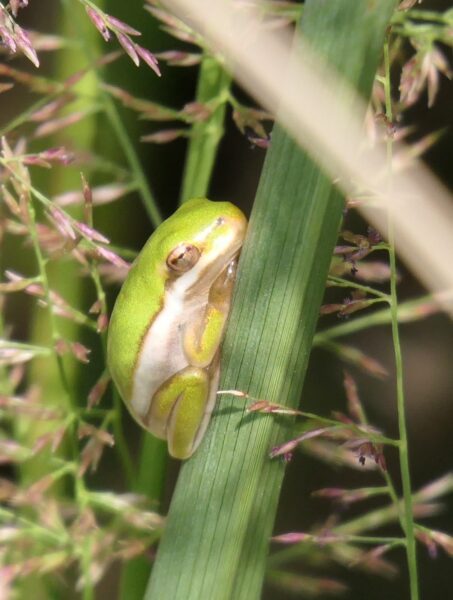
The high humidity and warm rains brings out the treefrogs.
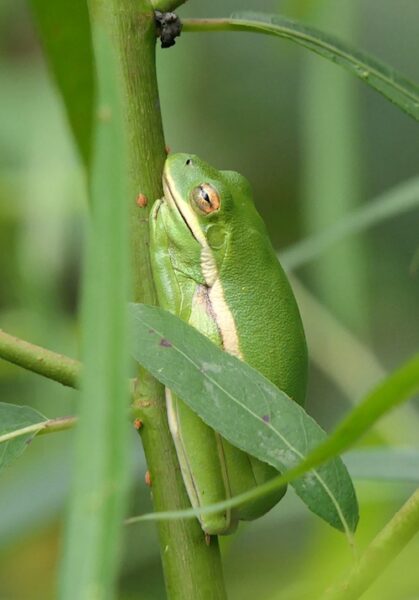
Coincidentally, about a week later, there were hundreds of froglets in the vegetation alongside the Floating Walkway in our wetlands. Most were perched on buttonbush leaves while some latched onto grass stems. Some still had a small tail. The tail will be completely absorbed by the frog’s body.
The froglets were approximately 12 – 17 mm from the tip of the tail to nose.
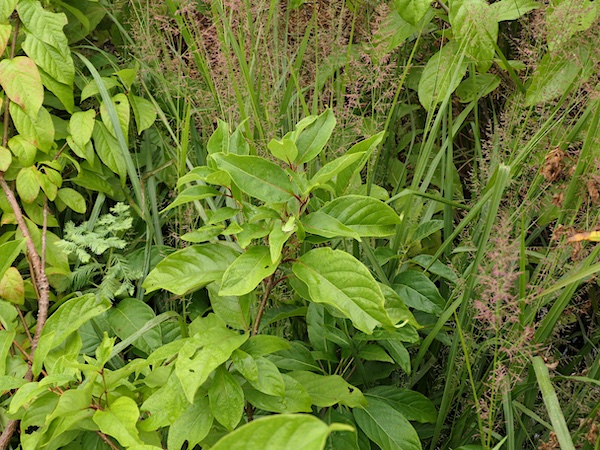
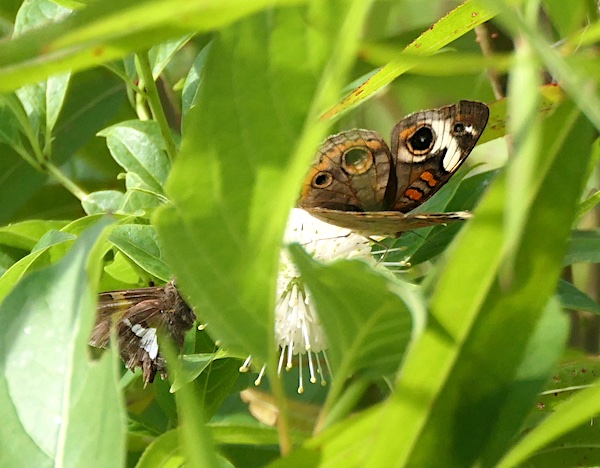
While surveying the plants and water from the Floating Walkway in Explore the Wild I noticed a dark butterfly with two big “eyespots” on the one wing that was visible through the vegetation. It was a common buckeye. I don’t see many buckeyes here at the museum. They’re common enough throughout the state but for some reason I don’t see them here, perhaps the habitat is not quite right. They prefer more open habitats.
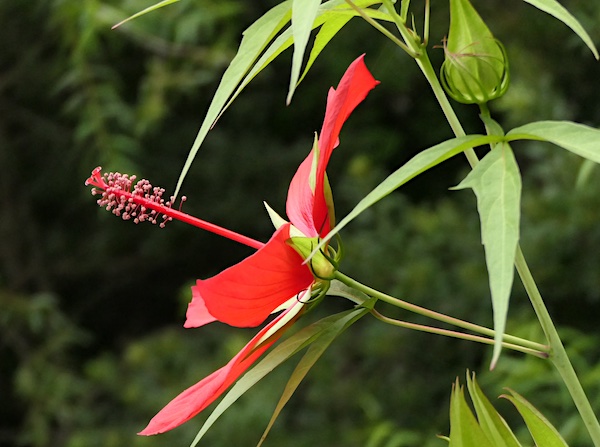
Hibiscus still has plenty of blooms left, ready to pop.
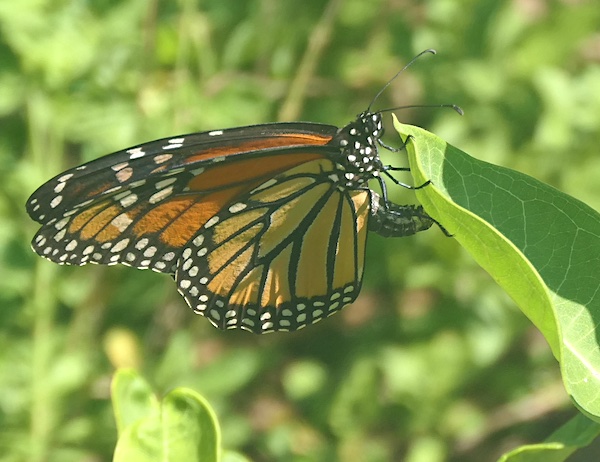
After a scarcity of monarch butterfly sightings, two of them flew around me as I watched them in the Butterfly House Garden. They probed the milkweed for the proper leaves to lay their eggs on.
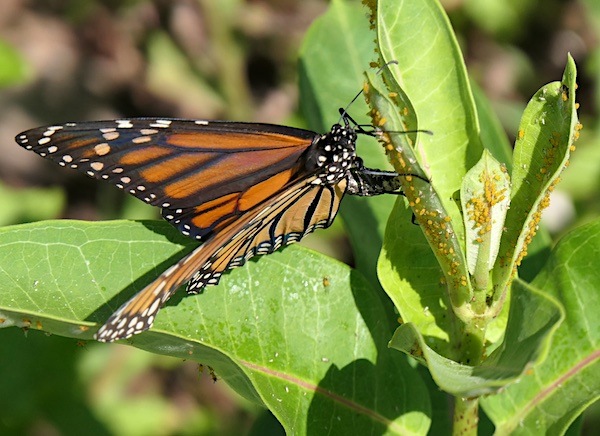
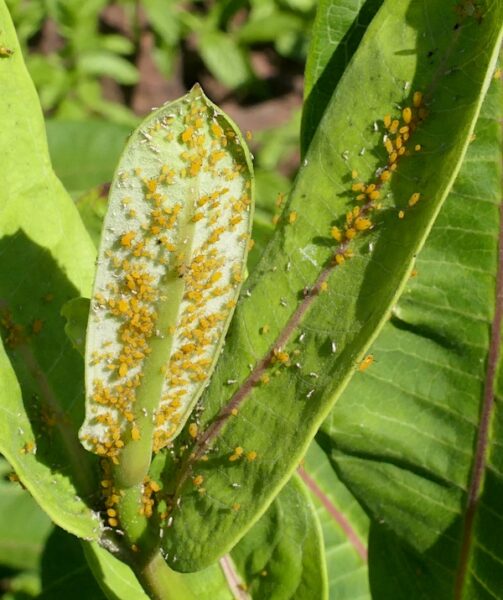
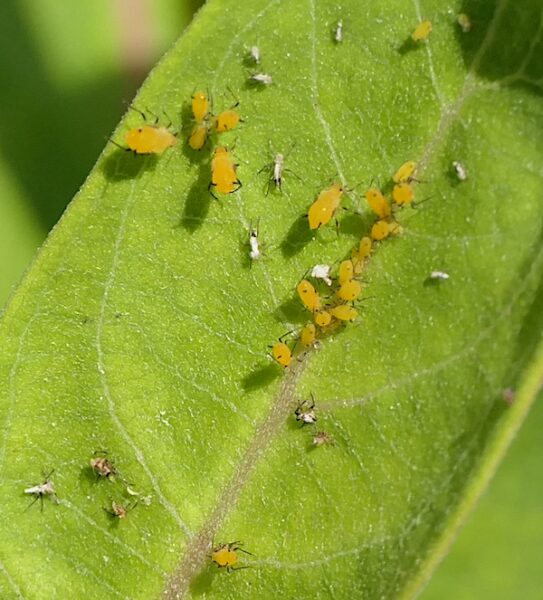
Each year oleander aphids colonize the local common milkweed, sucking the sap from the plant. Find a patch of milkweed, and you’ll find the aphid. These yellow aphids with black legs also feed on their namesake, the very toxic oleander shrub, neither are native.
A few interesting facts about oleander aphids, they bear live young and they’re all female. There are no males in the colony.
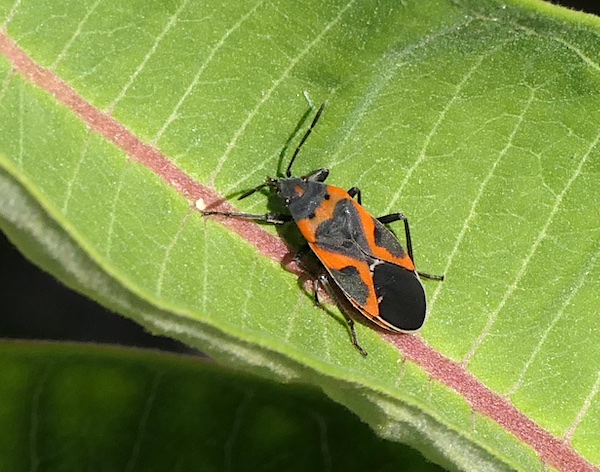
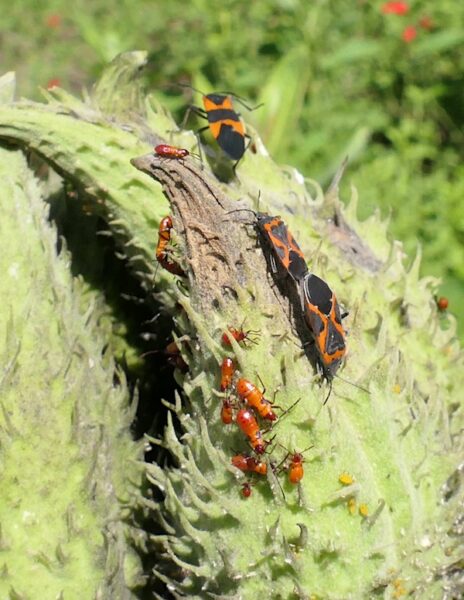
Milkweed bugs come in two varieties, small milkweed bug (Lygaeus kalmii) and large milkweed bug (Oncopeltus fasciatus). They can both be found on the same plant and both consume the seeds of the milkweed.
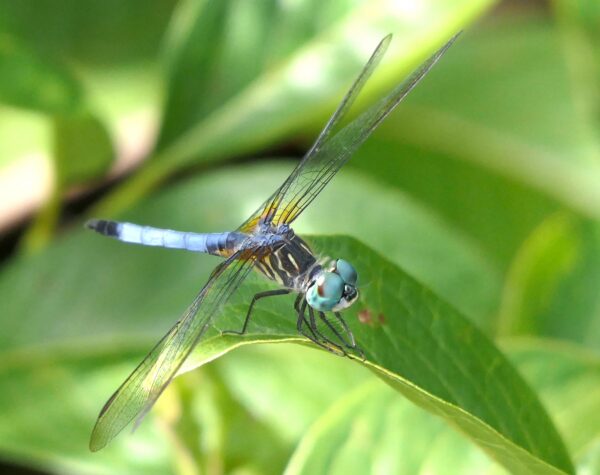
And finally, a dragonfly common at most local ponds, the blue dasher is familiar enough in our wetland as elsewhere. If you’re near water you’re likely to see one of these variably-sized dragonflies.
Have a nice day.
Ranger Greg