
Top Photo: Water level dropping by the day.
For weeks, no rain, the water level in our wetland kept dropping. When it looked as though the pond would become a meadow, a night of thunderstorms with heavy rain replenished the water. Though the level is still below average most of the muddy clay bottom is again wet (water level was at full as of 8 July). The turtles can swim instead of lugging it across the mud. The geese, too, can instead of mucking through the mire, float and glide.
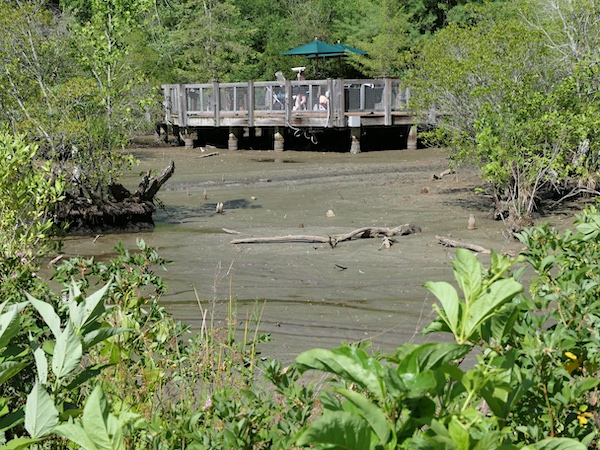
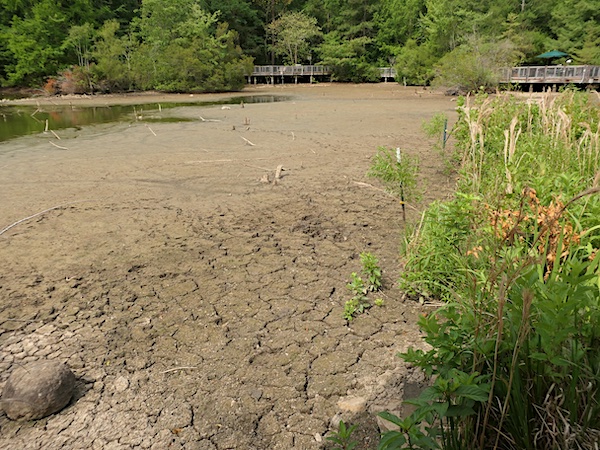
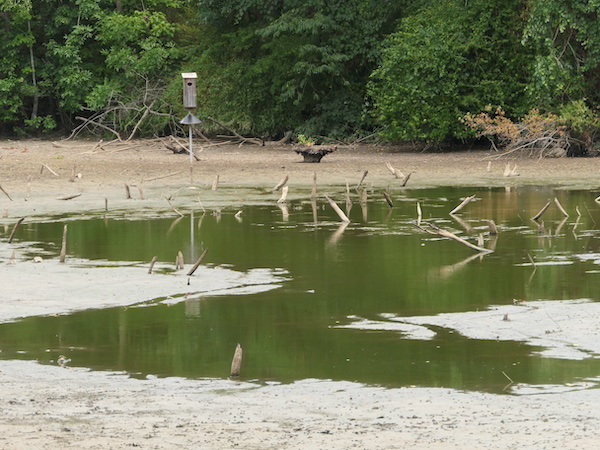
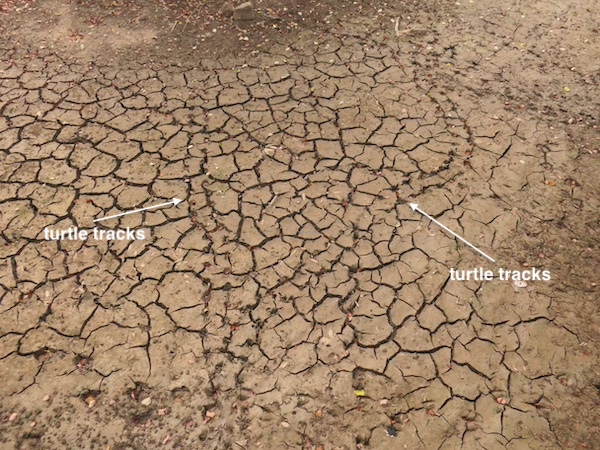
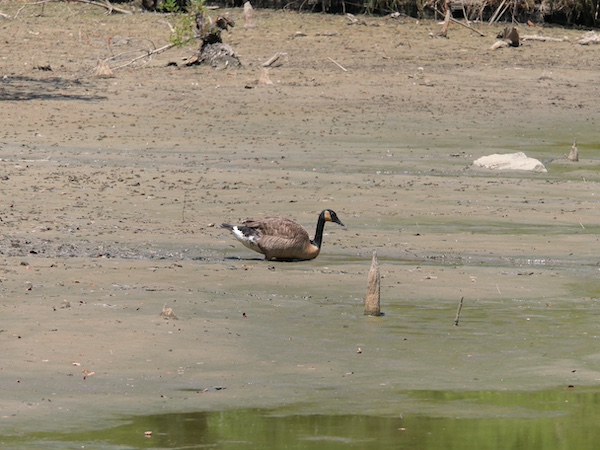
I was hoping for a complete dry-up. I thought it would be interesting to see how the animals that live in and around our wetland adapt to the change in habitat from aquatic to terrestrial.
And, I was thinking of shorebirds dropping in. I’ve seen spotted sandpaper, solitary sandpiper, and killdeer in our wetlands. The only other shorebird likely to show up in our little water world is least sandpiper, and that requires mud on which to land and forage. No mud, no shorebirds. But, there’s still time.
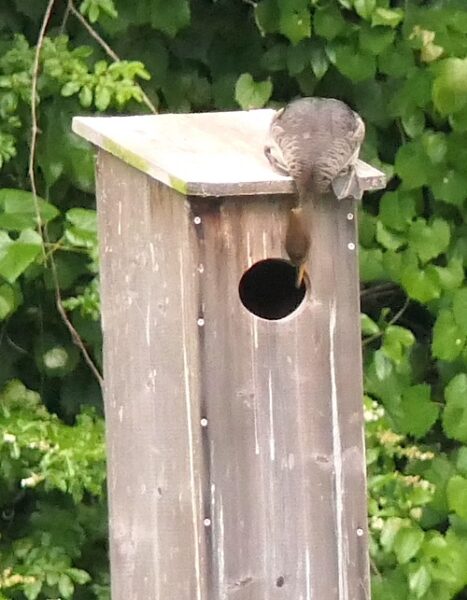
Before the near complete dry-up both hooded mergansers and wood ducks showed interest in the nest box erected for them on the far side of the pond. A pair of mergansers were investigating the wetlands and apparently chose to use our offering. The male disappeared (they have nothing to do with the nesting process once a site is selected and eggs deposited) and the female appeared to settle in.
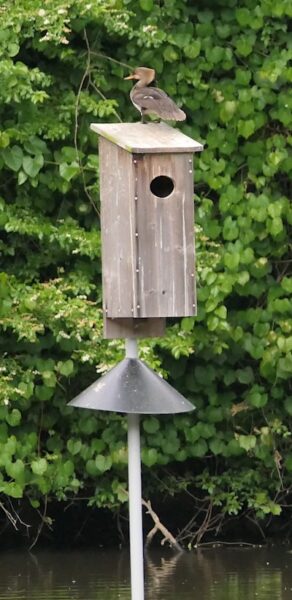
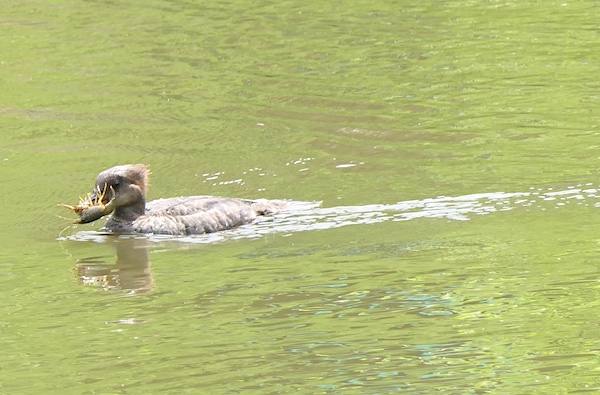
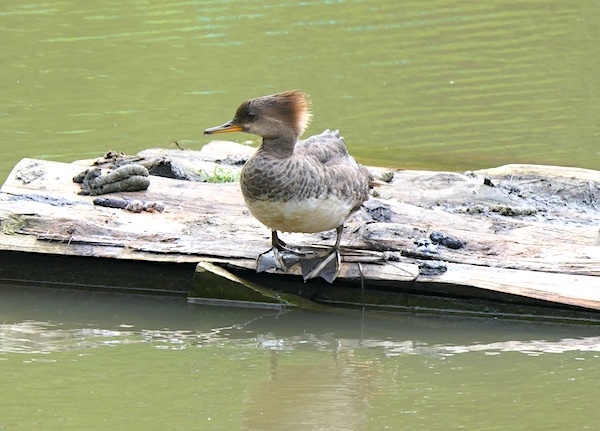
The female was seen several times perched on top of the nest box and in the water hunting crawfish. I never saw her again after May 9 as she stood on the roof of the nest box and had a peak inside.
More open to observation was a tree swallow nest in a nest box on the west side of the wetlands. The box is positioned to allow viewing from the boardwalk that partially surrounds the wetlands. The birds were first seen mating, bringing in nest material, and finally feeding the young. It is easily seen from the boardwalk.
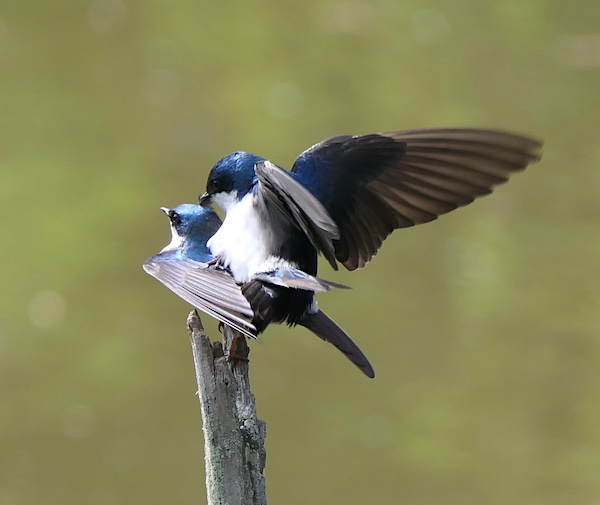
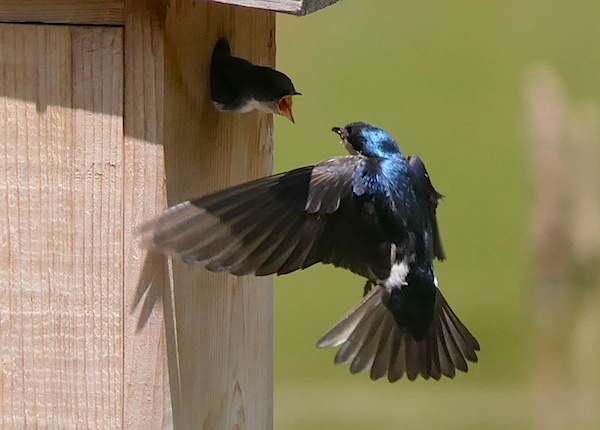
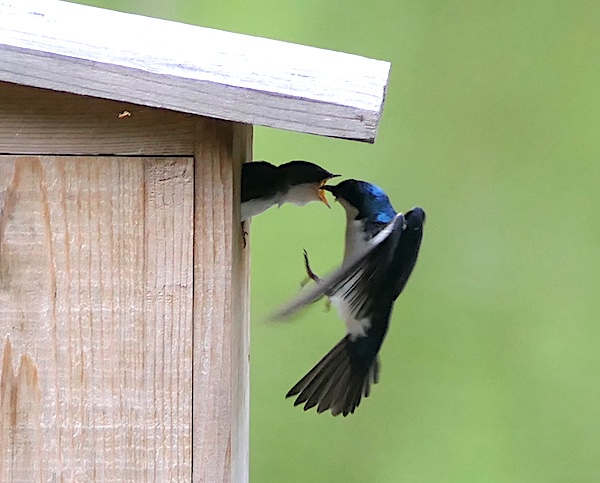
The tree swallows have apparently fledged and gone on to bigger and better things.
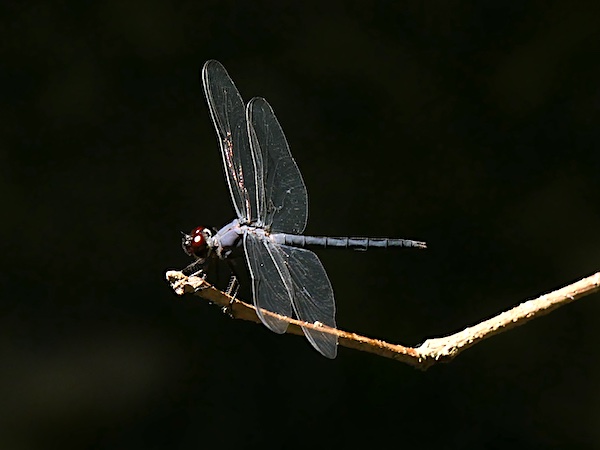
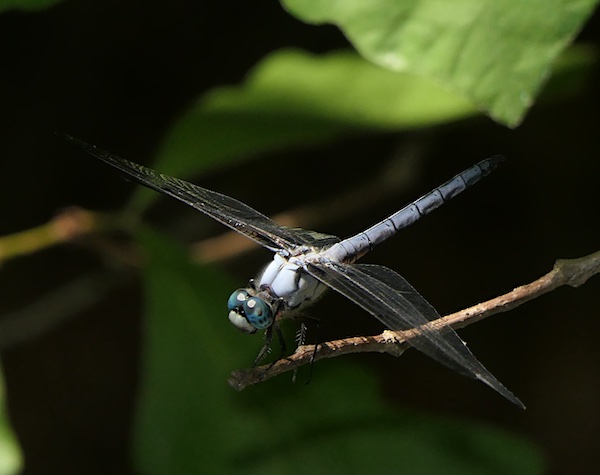
With water again in our wetland dragonflies are patrolling the habitat for airborne prey. Two of the largest and more conspicuous skimmers are illustrated below.
Have a good day outside.
Ranger Greg
Hey y’all cool posts. We are gonna get a possibility of 3 inches of rain up here. I took this week off to watch natal dispersal flights of raptors…
We got plenty of rain in the last week or so. We’re all filled up, almost back to normal.
Good luck with the hawks.