
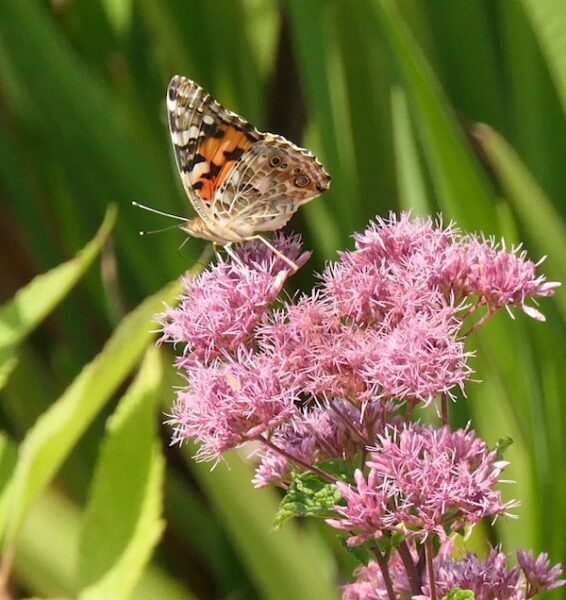
Top Photo: Painted lady butterfly nectaring on Joe-pye weed.
It will be in the 90s all week. Regardless of the high temps we have just moved into meteorological fall. Let’s have a look at a handful of butterflies that are out there braving the heat.
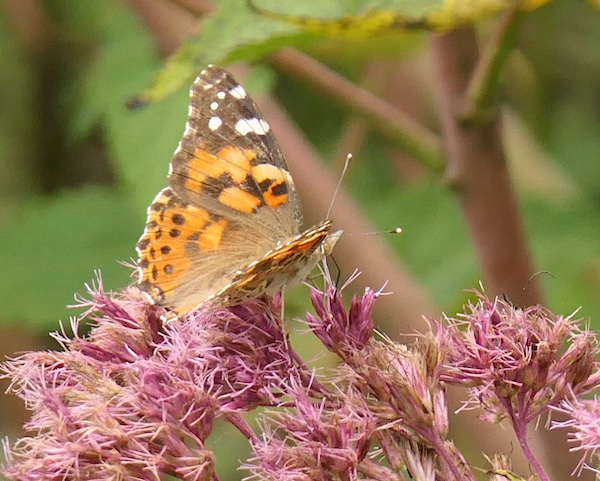
Painted lady butterflies are cosmopolitan. Here in North America they’re migratory spending the winter months in the southwest and moving north in the spring and summer in varying numbers each year. Sometimes the numbers are impressively large.
They move north out of the southwest following the food source. Shortages of fresh leaves due to climatic conditions forces the butterflies to seek nectar sources and host plants on which to lay eggs.
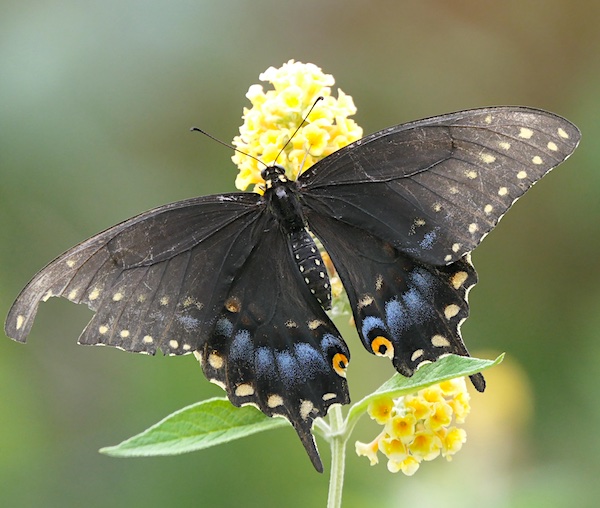
Black swallowtails are familiar to most gardeners, especially those who grow dill, carrots, fennel and other plants in the carrot family. Their green, yellow and black caterpillars will eat those plants to the nub. Some folks grow extra plants just for the caterpillars.
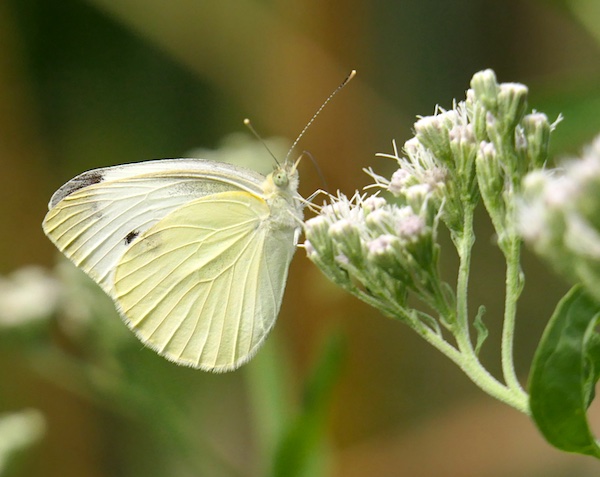
A non-native species, cabbage white is also a common and familiar butterfly.
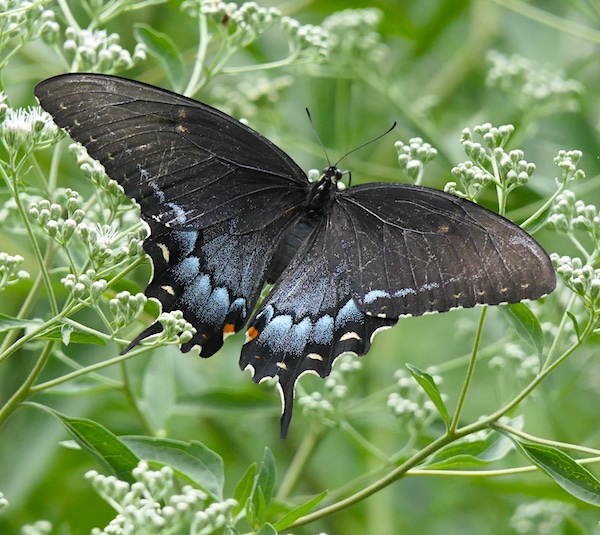
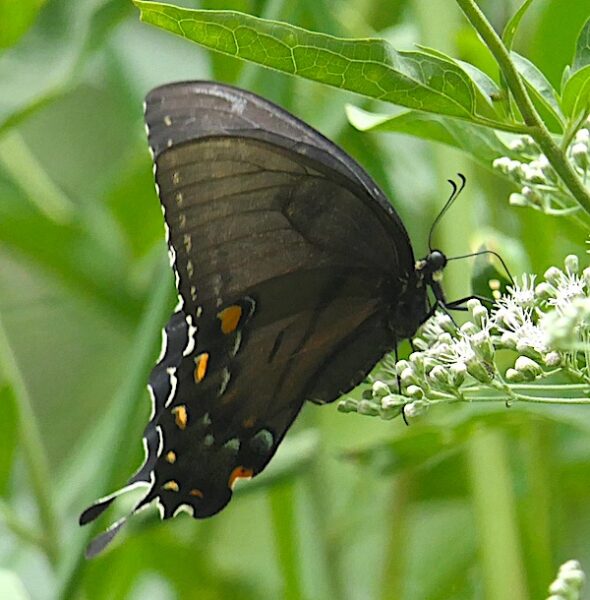
The much larger summer brood of eastern tiger swallowtails are out and about. Springtime individuals are small in size, due to the fact they spend the winter as pupae, last feeding on less than optimum fall foliage. The female here is a dark morph.
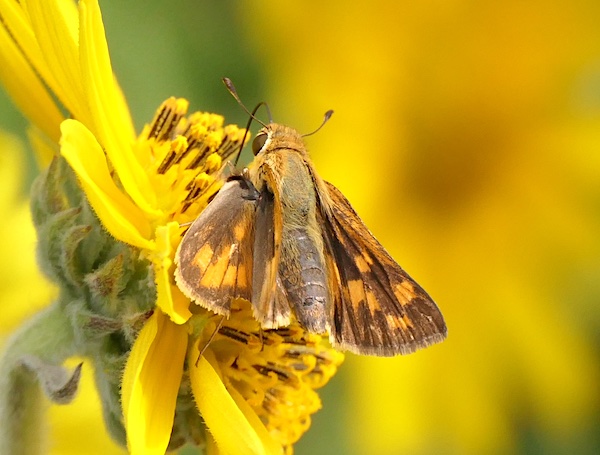
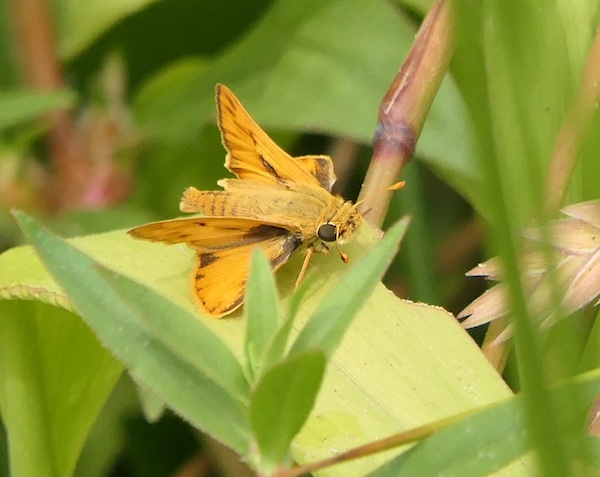
Tiny fold-wing skippers, fiery skippers are common at this time of year. Their quick low flight is characteristic of the species.
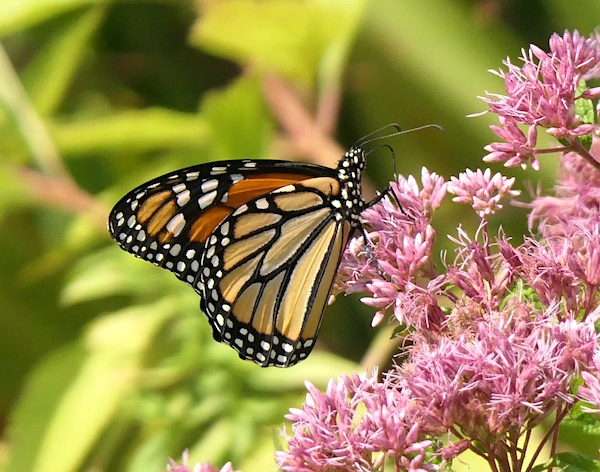
And of course everyone knows this orange and black butterfly, monarch.
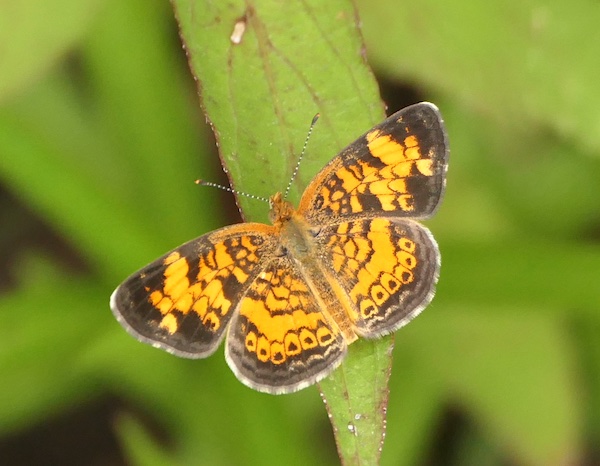
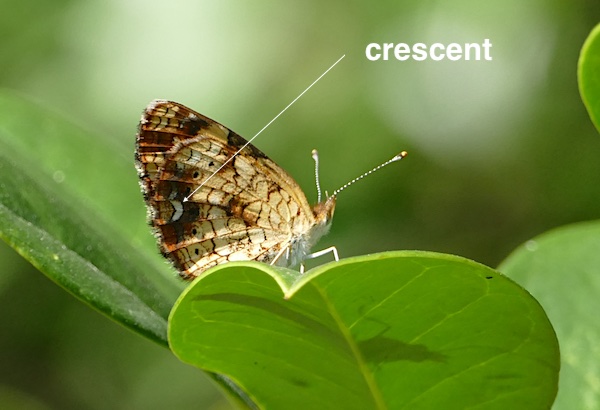
Orange and black, but much smaller than either monarch or painted lady, is the very common pearl crescent. Look for them low to the ground.
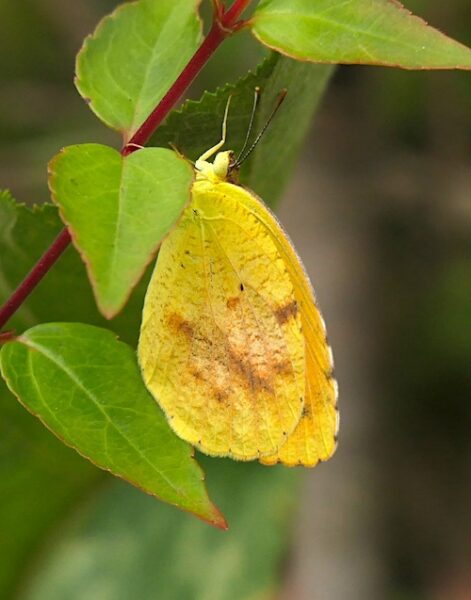
Sleepy orange butterfly is one of the sulphurs, mostly orange and yellow butterflies. Its color is, on the upper surface of the wings, in my opinion, about the same color as Cheetos (I don’t have a photo of upper surface of wings). They look like they’re a flying Cheetos as they buzz by you.
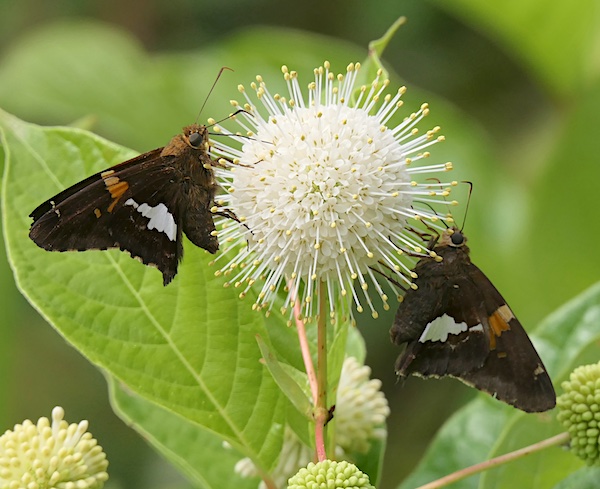
And of course, the ubiquitous silver spotted skipper. Large and swift in flight, with a large white splotch on the under surface of the hindwings they are nearly unmistakable.
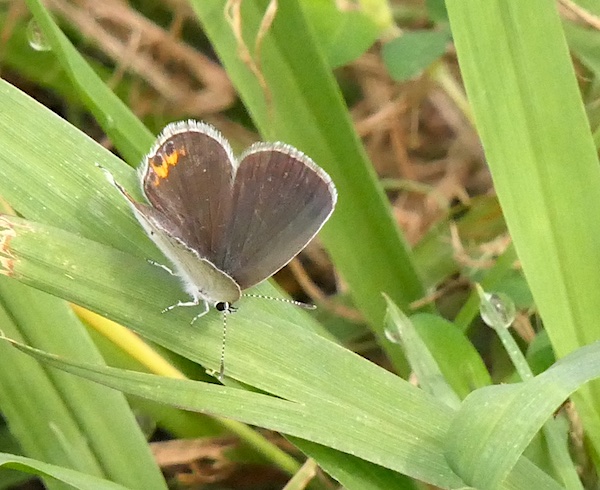
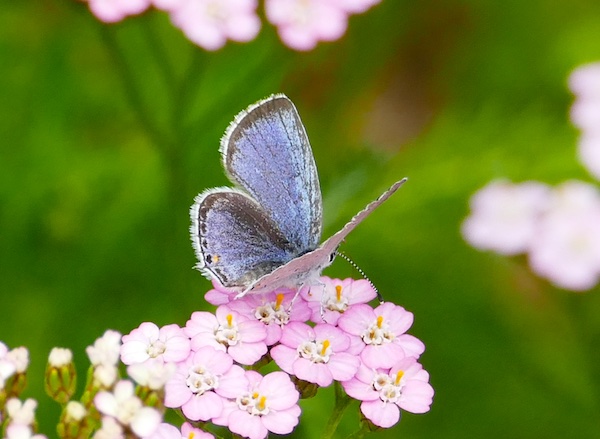
Eastern tailed-blues are small, low flying butterflies. The males are light gray underneath and bright blue above. Females are brown/gray on the upper surface of the wings, males are blue. There are orange spots on the rear margins of the hindwings.
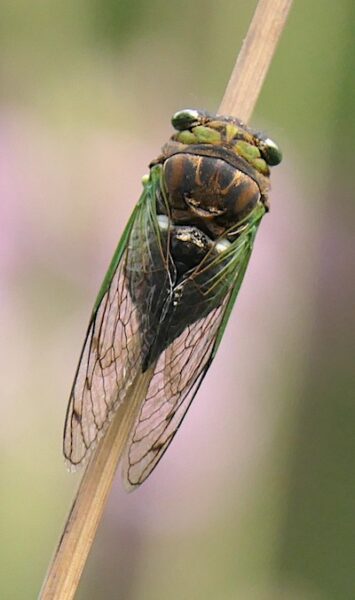
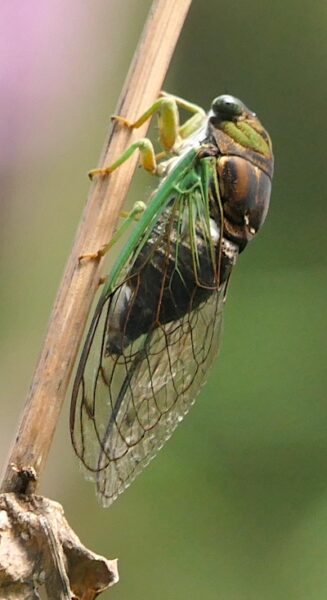
Not a butterfly, but seemingly everywhere you go at this time of year are annual cicadas, sometimes called dog-day cicadas. They emerge and vocally announce themselves at this time of year when the Dog Star, Sirius, rises with the sun. You’ll almost certainly hear them rather than see them. In the northern hemisphere, during the hottest days of the year, the dog days of summer and the big green, white and bronze bugs go hand in hand. Though the dog-days are waning, the cicadas are still singing strong.
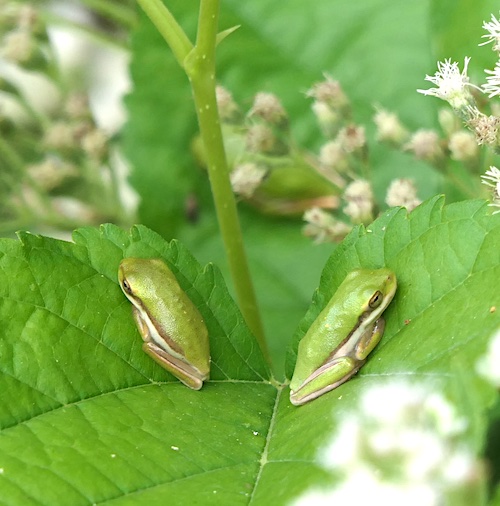
Also not a butterfly but an amphibian, green tree frog juveniles are still appearing on the leaves of buttonbush and other plants on the Floating Walkway in Explore the Wild.
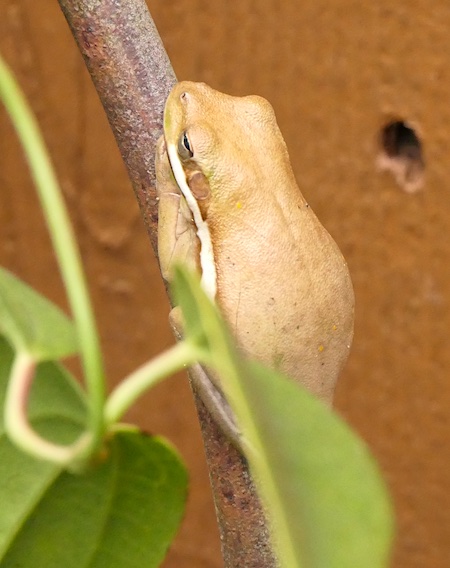
I ran into an adult with a slight color change from the typical “green” of green tree frogs. Perhaps the frog was trying to match the background. They can become dark brown, bright green, yellow and shades in between.
I came upon a blue green tree frog in our wetland, years ago. But the color on that individual was due to an entirely different phenomenon.
Click here to see for yourself. Blue Green Tree Frog
So, be careful of the heat but get out and see what you can find, butterflies, frogs, flowers…it’s all out there for you to explore.
Ranger Greg
Beautiful!