
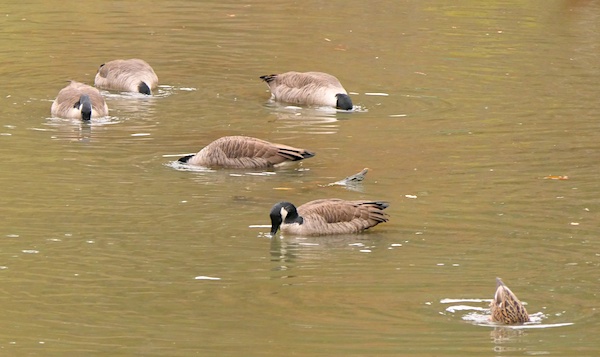
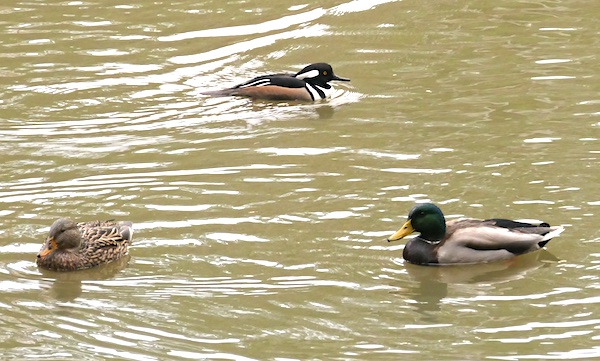
Top Photo: Some of the visiting waterfowl, Canada geese, mallards and hooded mergansers.
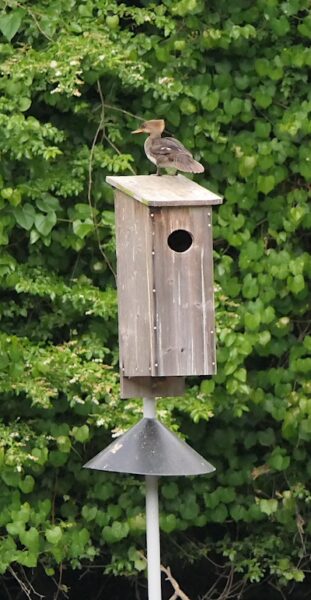
In our wetlands on November 21, among the dozen or so Canada geese and approximately ten mallards, were two hooded mergansers. There’s nothing unusual about hooded mergansers being at our site in fall, they’ve shown up each November of my previous eighteen years here at the museum. We even had an attempt by them to nest here last spring/summer.
The mergansers made it in this November as well. I sometimes see them as early as the first half of October but I don’t count them as late if they arrive in November. There are only three so far, an apparently already paired couple and a lone female.
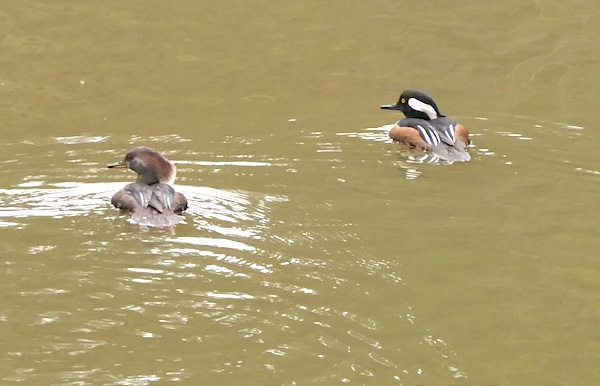
I’ve seen as many as thirty-five hooded mergs in our wetlands at one time. They come in around the middle of November, start to pair off and usually disperse to other local ponds. The numbers have been getting fewer and fewer each fall. I’m not sure this pair will stay, the water had nearly dried up due to the current drought and prey seems to be hard to find. Although, heavy rain the past few days has helped. In fact, the water level is nearing normal depth as I write.
The mergansers feed on fish, crustaceans, aquatic insects, diving below the surface to do so. The mallards and geese eat fish, crustaceans and aquatic insects too but incidentally, mostly slurping them up with the vegetation they munch on. As long as there are plants to gulp down they’ll be fine.
The geese typically return in February. They start setting up territories as soon as they arrive and battle for turf throughout the spring and into summer. I’m not sure if they’ve changed their strategy or have only stopped in temporarily, planning to come back in February.
The mallards come and go throughout the year. They’ve nested here many times, not always successfully.
As always, it’s going to be interesting to see how the waterfowl situation plays out this year.
Ranger Greg