
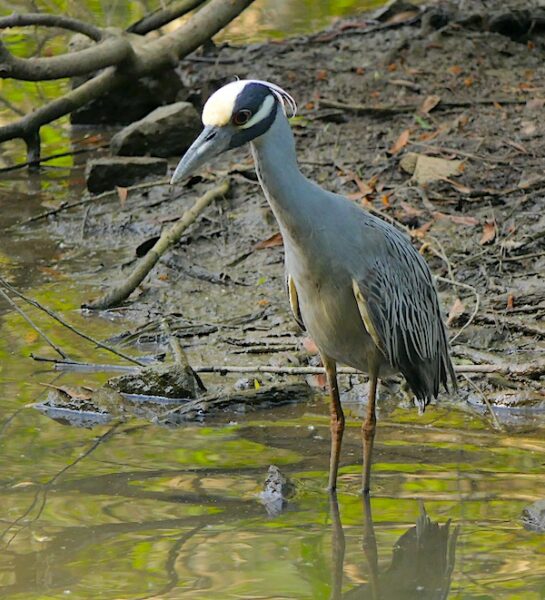
Top Photo: Yellow-crowned night heron, adult.
I’ve only seen a yellow-crowned night heron (YCNH) here in our wetlands four times (2011, 2018, 2023, and now, 2026).
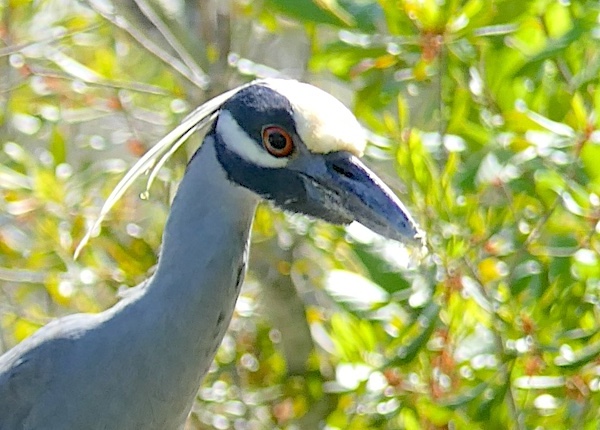
On April 3rd I received a radio call from sharp-eyed Exhibits Tech Dakota. He was on the Floating Walkway in the wetlands and was looking at a yellow-crowned night heron. “I’ll be right there,” was my reply.
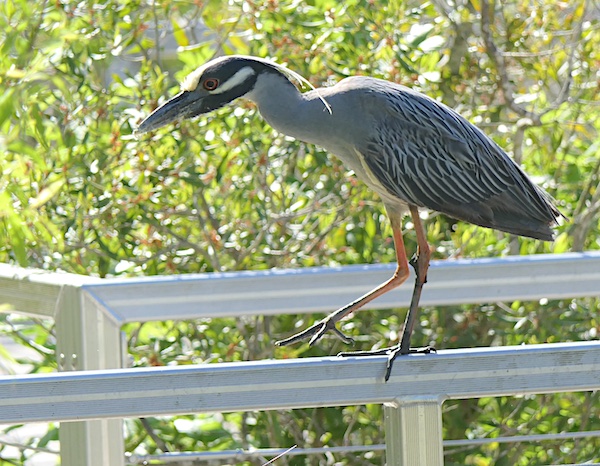
In my experience, yellow-crowned night herons are essentially coastal. I’ve watched them for hours, slowly stalking fiddler crabs and other crustaceans on salt marshes from New England to Florida. They nest mainly in the southeast. They’re missing from much of Appalachia.
These short-necked and long-legged herons nest locally here in Durham and Chapel Hill, wherever there is sufficient quantity of crayfish, which is their mainstay away from coastal crabs. We have crayfish in our wetland, the invasive, red-swamp crayfish (Procambarus clarkii). I’ve been wishing for yellow-crowneds for years.
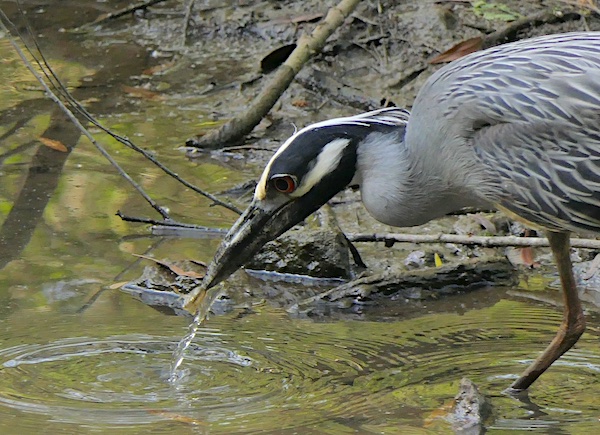
Here’s to the YCNH attracting a mate, some friends, and staying for a while.
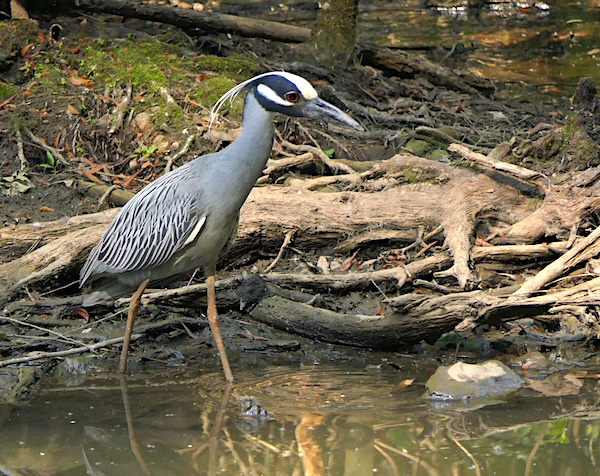
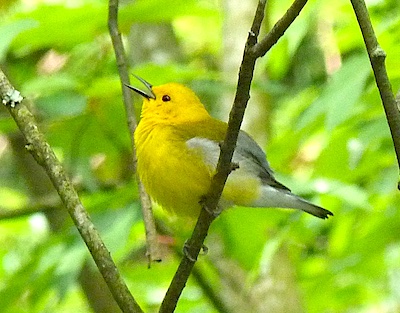
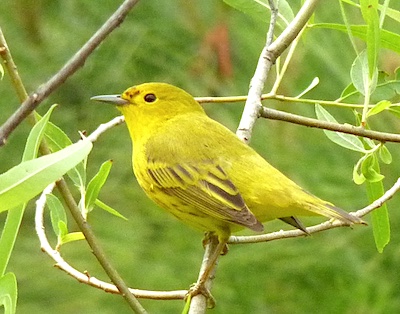
This bird seems to be in high breeding plumage, even so, the yellow on the bird’s crown is subtle. It’s a pale yellow, definitely not prothonotary warbler, or even yellow warbler “yellow.”
Ranger Greg