
Top Photo: Great blue heron relaxes alongside Floating Walkway in wetlands.
Over time, I’ve seen six different species of heron in our 3 acre wetland at the Museum of Life and Science. They include great blue heron, great egret, little blue heron, green heron, black-crowned night heron, and yellow-crowned night heron. By far, the most often observed species is the great blue heron (GBH).
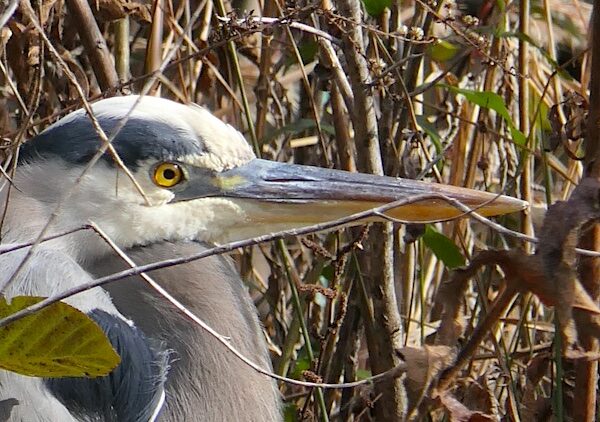
GBHs are year round residents, they nest locally and they’re used to sharing their habitat with people and urbanness. And, they’ll eat just about anything that swims, crawls, slithers, or flies. If it fits down their gullet they’ll eat it. They’ll try even if it doesn’t fit.
I don’t see them as often as I had in the past. There used to be a large prey base in our wetland area which included an abundance of golden shiners, amphibians, as well as a very healthy aquatic invertebrate population. Those prey items have reduced in number or have disappeared altogether. If the food’s not here there’s no need for the herons to stay.
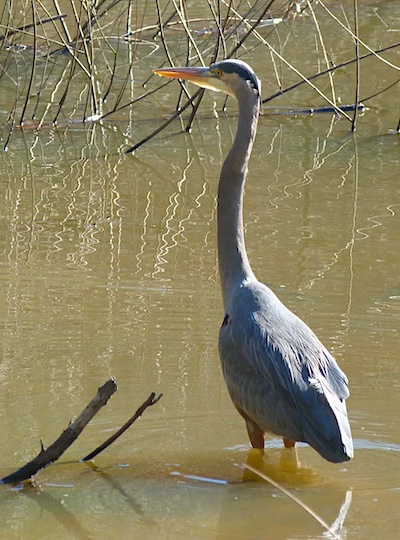
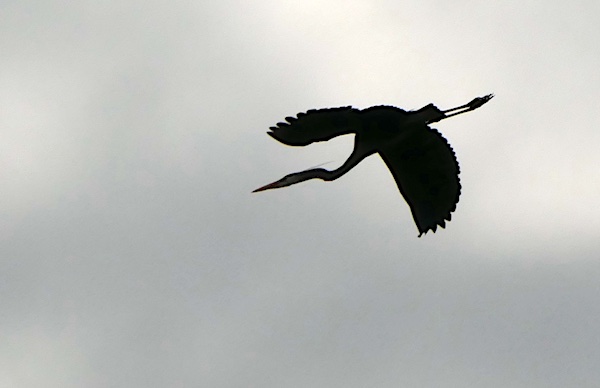
Though we don’t have a regular resident GBH we do get an occasional bird stop by. It’s always good to see a prehistoric looking GBH come winging in to the wetlands.
Ranger Greg
We have had the occasional GBH visit this winter at our pond at the other end of E Delafield. Probably on their way to the museum!
Gorgeous photos!