
Top Photo: Yellow-rumped warbler forages on frozen pond ice.
I was standing on the boardwalk looking down at an ice star a dozen feet or more below me. Something else caught my eye. A handful of small birds were hopping along on the ice of the pond pecking at some unseen, to my eyes, objects on the ice.
The birds were warblers, yellow-rumped warblers (butter-butts), a species that can take the winter cold far more readily than most other warbler species.
Butter-butts are, like the other fifty some species of North American warbler, insectivorous. They can, however, switch over to fruit when cold weather hits, particularly the fruit of wax myrtle where the bird gets its used-to-be common name, myrtle warbler. They will eat insects whenever they’re available. I sometimes see them throughout the winter exploiting local aphid, psyllid, or other small insect hatches during winter warm spells.
The birds below me seemed to be picking something from the ice. I took several images. When I got back to my office and downloaded the pics there appeared to be tiny white-colored insects in the water or on the thin ice of the ice star center. In the pictures below, note the warbler focusing on something in front of it.
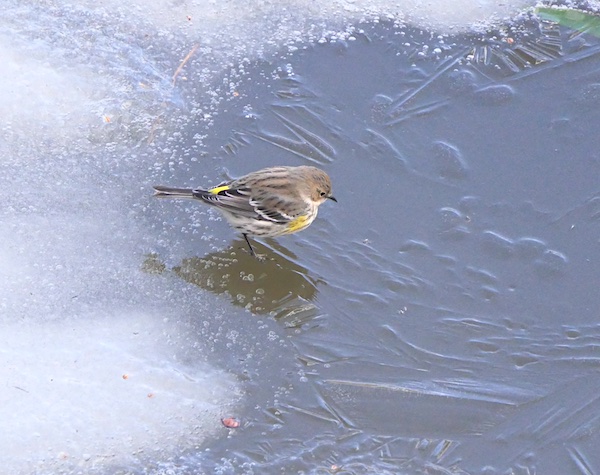
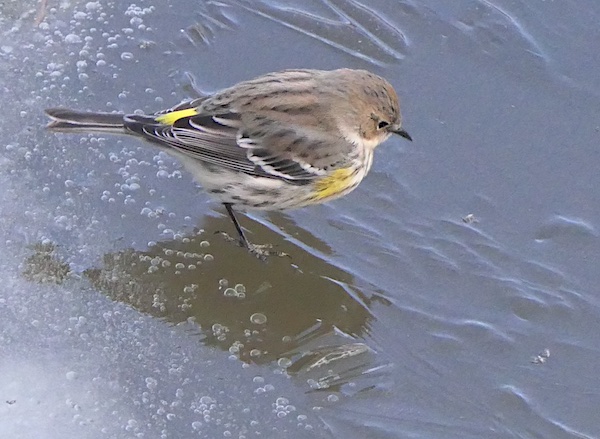
In the next image that tiny white object is gone after having just been pecked at by the bird. The bird now concentrates on two more white objects which can be seen in the next image (near bottom right).
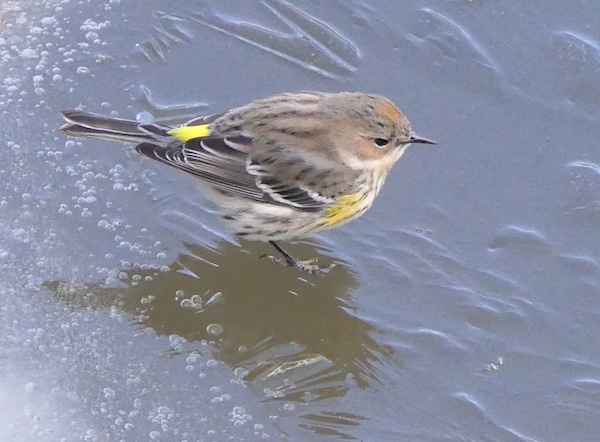
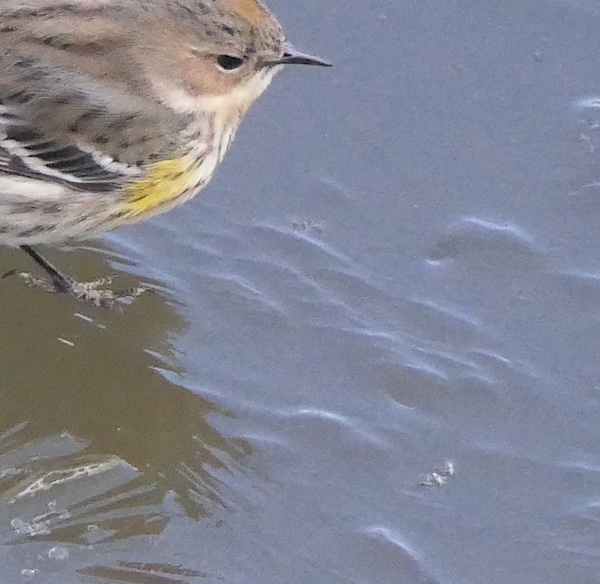
I pondered the identity of the white objects the birds were pecking at. Could they be an early emergence of midges? Or were they springtails?
I’ve had encounters with springtails here at the museum in the past. Read about one such encounter 15 or so years ago as well as an explanation of what exactly a springtail is. They are not insects, despite having 6 legs.
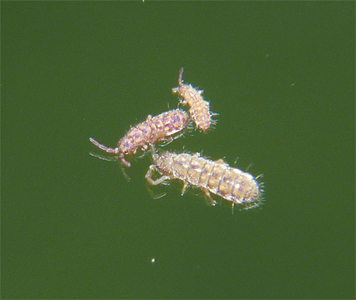
Do you agree with my assessment as to the identity of the butter-butts’ attention, a species of springtail, or do you have other thoughts? If you have a better idea, let me know.
There’s always something going on outdoors, but if you’re not out there, you’re not going to see it!
Ranger Greg
Might be aphids. I’ve seen them on trees in the winter.
They could very well be aphids. I was not able to get close enough for a close look or photography.
Thanks