
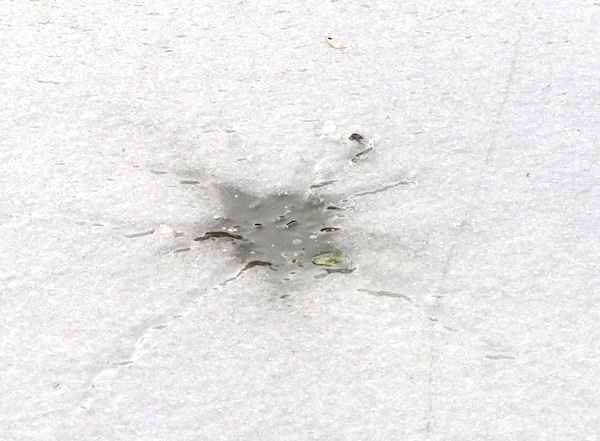
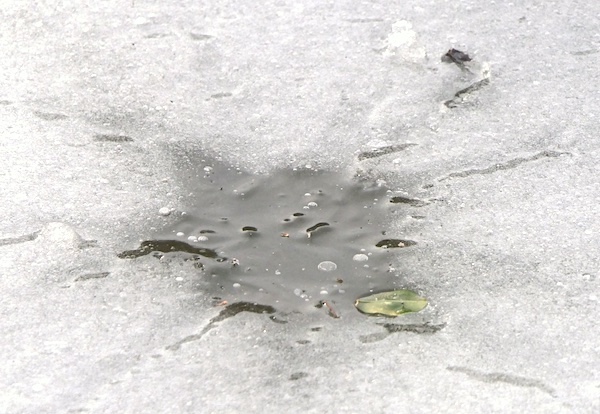
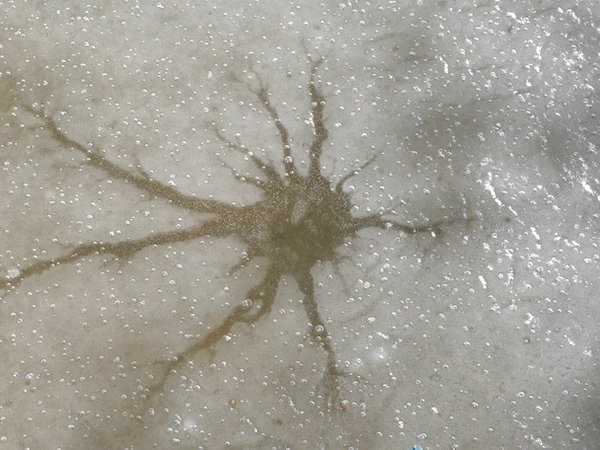
Top Photo: Ice star.
The process starts with a pond or lake covered with a thin sheet of ice. Add snow. The snow weighs down the ice forcing water to rise up through any naturally occurring small holes or cracks in the ice. The water, forced up through the hole, radiates and flows down the snow-covered ice forming little “rivulets” (Picture an erupting volcano with lava flowing down its sides.) And there you have it, an ice-star (some call them pond or lake stars or even ice spiders).
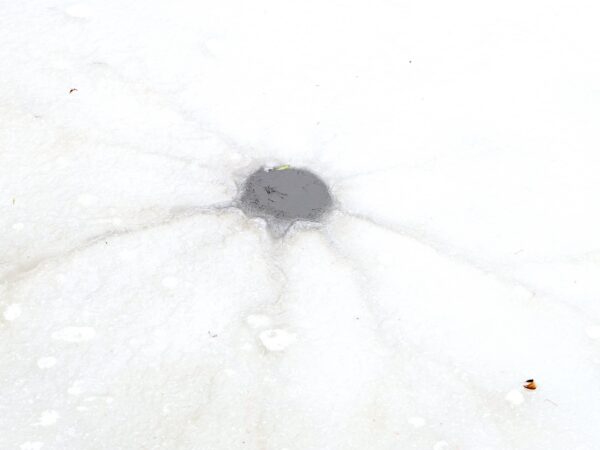
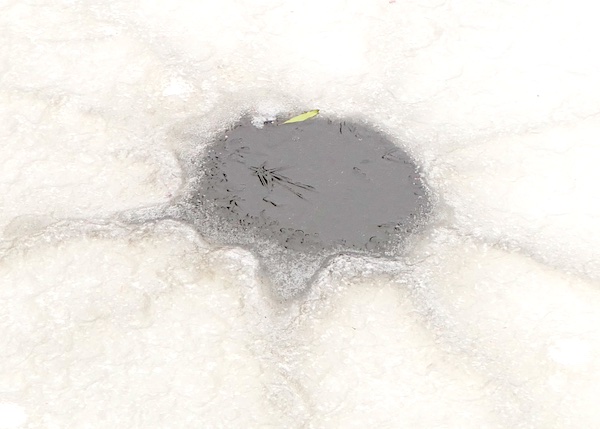
Once on the surface the water slowly freezes creating clear transparent ice. The slow freeze permits air bubbles and gases to escape before freezing which normally creates the translucent to opaque characteristics of the surrounding ice in these images. The ice stars can be mere inches or several feet across.
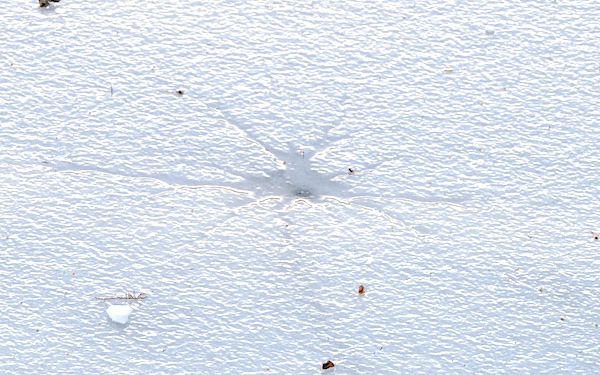
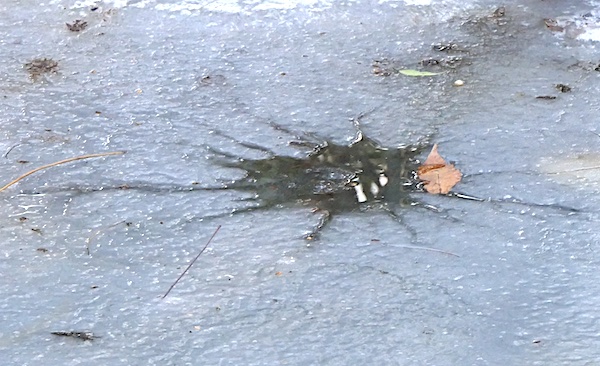
Here on the Piedmont of North Carolina we don’t often see these interesting looking designs on our ponds and lakes. Freezing water is not all that common here for most of the winter. So when it happens, when the ponds and lakes freeze, it attracts attention.
Another phenomenon, at least here at the museum is air bubbles under the ice. We have a pipe which runs along the bottom of the open water of our wetlands. The pipe is connected to a pump which forces air out through the conduit. The pipe runs along the bottom looping around much of the area of the pond. It’s perforated and is meant to aerate the slow, essentially stagnant water. The pump is on a timer which turns on at night. It prevents certain parts of the pond from freezing except during extended periods of sub-32 degree temperatures.
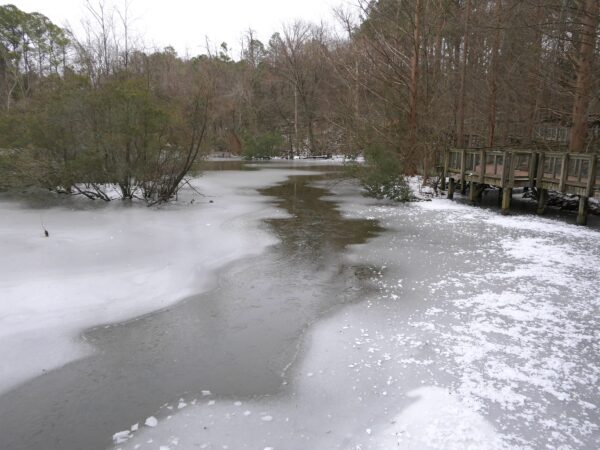
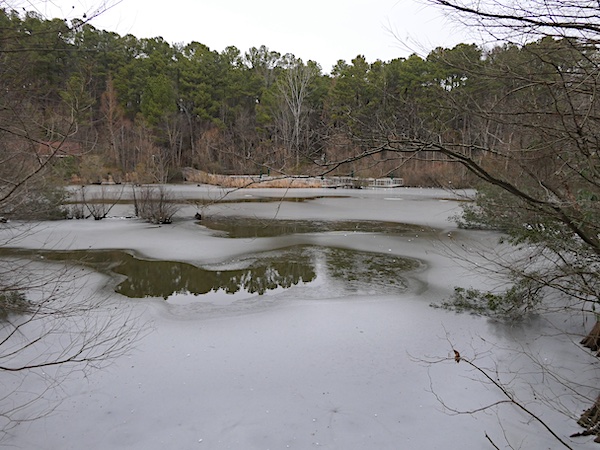
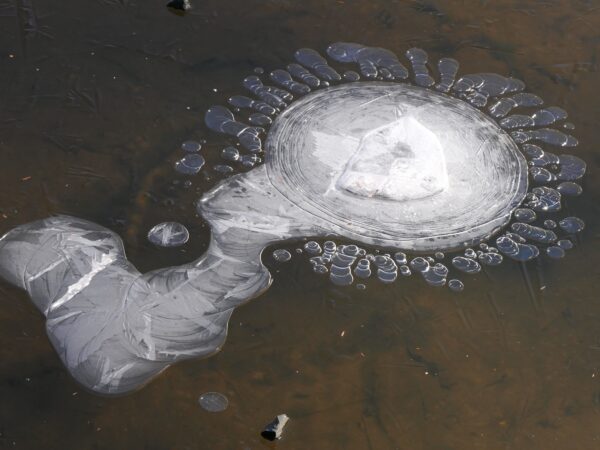
What you see in this picture (below) is a random pattern of air bubbles where the once open water refroze trapping the aerator bubbles in the ice. The whole object is approximately 2 feet from bottom left to top right of image.
All of the images are from our wetland and can be seen from the path/boardwalk around the wetland. The ice bubbles (above) have since disappeared.
Ranger Greg
Very interesting and great photos!